

What Is Semantic SEO and Why Keywords Alone Don’t Work Anymore
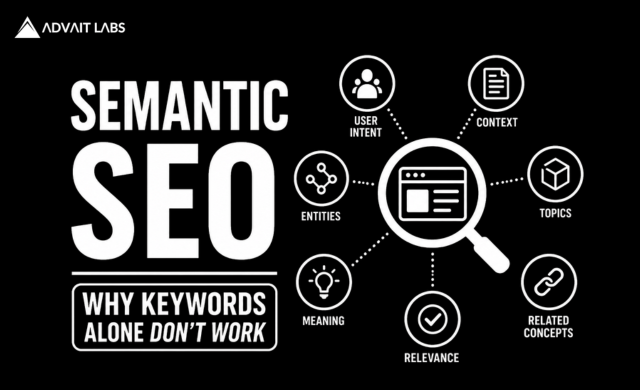
Semantic SEO has fundamentally changed how websites rank in search engines. Years ago, simply repeating a target keyword multiple times on a page could help improve rankings. Today, search engines are far more intelligent. Google uses artificial intelligence, natural language processing (NLP), machine learning, and semantic understanding to interpret the meaning behind a search query rather than matching exact keywords. As a result, businesses that still rely on keyword stuffing or exact-match optimization often struggle to compete in modern search results.
Instead of focusing on individual keywords, Semantic SEO encourages businesses to create comprehensive, context-rich content that answers user questions, covers related concepts, and demonstrates topical expertise. This approach not only improves traditional SEO but also increases visibility in AI-powered search experiences such as Google AI Overviews, ChatGPT Search, Gemini, and Perplexity.
At Advait Technology Labs, we build SEO strategies based on semantic search principles, helping businesses create authoritative content that ranks across search engines and AI-driven platforms. In this guide, you’ll learn what Semantic SEO is, why it matters, and how to implement it effectively.
What Is Semantic SEO?
Semantic SEO is the practice of optimizing content around topics, concepts, user intent, and relationships between ideas rather than focusing solely on individual keywords.
Instead of creating separate pages for every keyword variation, Semantic SEO helps search engines understand the complete context of your content.
For example, a page about technical SEO should naturally cover related concepts such as:
- Crawl budget
- Indexing
- XML sitemaps
- Robots.txt
- Core Web Vitals
- Structured data
- Internal linking
- Canonical tags
By connecting these topics, search engines gain a deeper understanding of your expertise.
Why Keywords Alone No Longer Work
Search engines have evolved significantly over the past decade.
Google now focuses on understanding:
- User intent
- Context
- Relationships between entities
- Content quality
- Topic completeness
- Expertise and authority
Repeating the same keyword multiple times no longer guarantees better rankings.
Instead, Google evaluates whether your content thoroughly answers the user’s question.
How Google Understands Search Today
Google uses advanced AI technologies to interpret search queries.
Rather than matching exact phrases, it analyzes:
- Search intent
- Synonyms
- Related concepts
- Context
- Entities
- User behavior
For example, if someone searches for:
“How can I make my website rank higher?”
Google understands the user may be looking for information about:
- SEO
- Technical SEO
- Content optimization
- Backlinks
- Core Web Vitals
- Keyword research
Even if those exact words aren’t used in the query.
This is why semantic optimization is so important.
Benefits of Semantic SEO
Implementing Semantic SEO provides several long-term advantages.
Improve Search Rankings
Comprehensive content often ranks for hundreds of related keywords rather than just one.
This increases overall search visibility.
Build Topical Authority
Covering an entire subject demonstrates expertise.
Google is more likely to trust websites that consistently publish comprehensive content around related topics.
Rank for More Search Queries
Semantic optimization helps your pages appear for:
- Related keywords
- Question-based searches
- Long-tail keywords
- Conversational searches
Without creating dozens of nearly identical pages.
Improve User Experience
Visitors find more complete answers on a single page.
This increases engagement and reduces the need to search elsewhere.
Prepare for AI Search
AI-powered search engines rely heavily on semantic understanding.
Semantic SEO improves your chances of appearing in AI-generated responses.
Key Elements of Semantic SEO
Building a successful semantic SEO strategy involves several components.
Focus on Topics Instead of Keywords
Choose broad topics rather than isolated keywords.
For example:
Instead of creating separate pages for:
- SEO tips
- SEO advice
- SEO techniques
Create one comprehensive guide covering the entire topic.
Understand Search Intent
Every piece of content should match why users are searching.
Intent generally falls into four categories:
- Informational
- Commercial
- Transactional
- Navigational
Matching intent often matters more than keyword density.
Use Related Keywords Naturally
Semantic SEO encourages the natural use of:
- Synonyms
- Related phrases
- Industry terminology
- Common questions
- Supporting concepts
This improves contextual relevance.
Build Topic Clusters
Create pillar pages supported by detailed cluster articles.
For example:
SEO Pillar
↓
Technical SEO
↓
Core Web Vitals
↓
Internal Linking
↓
Crawl Budget
↓
Semantic SEO
This structure strengthens topical authority.
Strengthen Internal Linking
Internal links help search engines understand relationships between pages.
They also improve navigation and crawlability.
Semantic SEO and Structured Data
Structured data provides additional context for search engines.
Using Schema markup helps Google better understand:
- Articles
- FAQs
- Products
- Organizations
- Services
- Reviews
While structured data doesn’t directly improve rankings, it supports richer search experiences.
Semantic SEO for AEO
Answer Engine Optimization (AEO) focuses on providing direct, concise answers to user questions.
Semantic SEO naturally supports AEO by encouraging:
- Clear headings
- Question-based content
- Short summaries
- Comprehensive explanations
- FAQ sections
These elements improve the likelihood of appearing in featured snippets and AI-generated answers.
Semantic SEO for GEO
Generative Engine Optimization (GEO) prepares content for AI-powered search systems.
AI platforms prefer content that is:
- Comprehensive
- Accurate
- Well-structured
- Contextually rich
- Interconnected
Semantic SEO creates exactly this type of content, making it easier for AI systems to understand and reference your website.
How to Implement Semantic SEO
To improve your semantic SEO strategy:
- Research topics instead of individual keywords.
- Build comprehensive pillar pages.
- Create supporting topic clusters.
- Answer related questions naturally.
- Use semantic keywords and entities.
- Strengthen internal linking.
- Add structured data where appropriate.
- Regularly update content to maintain relevance.
These practices help search engines understand your expertise and improve long-term rankings.
Final Thoughts
Semantic SEO represents the future of search optimization. As Google and AI-powered search engines become increasingly sophisticated, businesses must move beyond keyword-focused strategies and create comprehensive, user-focused content that demonstrates genuine expertise.
By organizing content around topics, understanding search intent, strengthening internal linking, and building topical authority, businesses can improve rankings, increase organic traffic, and remain competitive in both traditional search engines and AI-driven search experiences.
If you’re ready to build a smarter SEO strategy that goes beyond keywords, Advait Technology Labs can help you implement Semantic SEO techniques that drive sustainable organic growth.
Visit Advait Technology Labs Today!
Frequently Asked Questions
What is Semantic SEO?
Semantic SEO is the practice of optimizing content around topics, user intent, and related concepts rather than relying only on exact-match keywords.
Why are keywords alone no longer enough for SEO?
Modern search engines use AI and natural language processing to understand context and intent, making comprehensive, high-quality content more important than keyword repetition.
How does Semantic SEO improve search rankings?
Semantic SEO helps pages rank for a wider range of related search queries by covering topics in depth, improving topical authority, and matching user intent.
Does Semantic SEO help with AI-powered search?
Yes. Semantic SEO creates well-structured, context-rich content that AI-powered platforms like Google AI Overviews, ChatGPT Search, Gemini, and Perplexity can better understand and reference.
