

Semrush Reports ‘Poisoned’ Google Results Affecting SEO Platforms
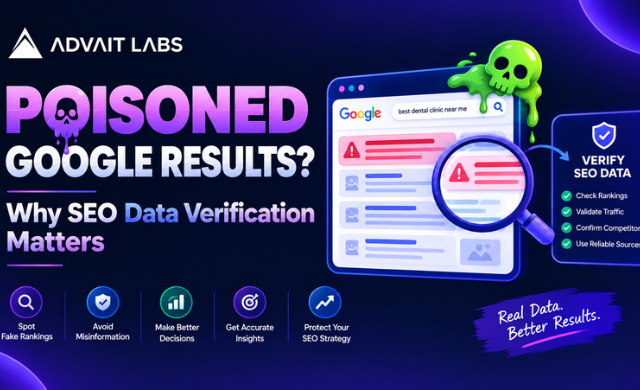
When an SEO platform describes Google search results as “poisoned”, the concern goes beyond a single ranking position. SEO professionals depend on search-result data to track visibility, compare competitors, measure campaigns and make decisions about websites.
For businesses and marketing teams, this raises an important question: what should you do when the search data you rely on appears unusual or difficult to interpret?
Understanding how SEO platforms collect and process search-result information can help teams avoid making quick decisions based on one unexpected data point.
Looking for a clearer approach to SEO data and website performance? Advait Labs can help businesses review their search visibility, technical SEO and reporting processes.
What Does “Poisoned” Google Results Mean?
The term “poisoned” can be understood as a description of search-result data that may be unreliable, distorted or difficult for an SEO platform to interpret correctly.
SEO platforms use search-result information for activities such as:
- Tracking keyword rankings
- Monitoring search visibility
- Comparing competitors
- Analysing SERP changes
- Measuring SEO performance
- Identifying ranking opportunities
- Creating performance reports
When the underlying search data changes or becomes difficult to interpret, the reports built from that data can also require closer review.
This does not automatically mean that a website has gained or lost genuine organic visibility. It may simply mean that the data needs additional context before a business makes a strategic decision.
Why SEO Platforms Depend on Google Search Data
SEO reporting is heavily dependent on search-result information.
For example, a marketer may track a keyword every week and notice that its position has changed. That movement could lead to questions about content, technical SEO, competitors or the search landscape.
However, a single ranking number does not tell the entire story.
Search visibility can be reviewed alongside:
- Organic traffic
- Search impressions
- Clicks
- Indexed pages
- Search queries
- Landing-page performance
- Technical SEO changes
- Competitor visibility
- Search Console data
Looking at multiple signals makes it easier to separate a genuine SEO trend from an unusual data point.
How Search Data Can Affect SEO Reporting
Rank Tracking
Rank tracking helps SEO teams monitor where pages appear for target keywords.
If the tracked results appear inconsistent, teams should avoid immediately changing page titles, content or technical elements simply because one ranking report looks different.
Instead, compare the movement with other available data.
Competitor Analysis
SEO platforms are often used to understand competitor visibility.
If competitor rankings suddenly appear significantly different, it is useful to review the broader search landscape before assuming that competitors have made major SEO improvements.
Performance Reporting
SEO reports are used to explain progress to business owners, marketing teams and decision-makers.
When data appears unusual, the reporting process should clearly distinguish between:
- Confirmed website performance
- Search-result observations
- Ranking changes
- Traffic changes
- Data that requires further verification
This keeps reporting more useful and prevents one metric from becoming the entire story.
How to Verify Unusual SEO Data
When an SEO platform shows unexpected results, your website should be checked independently.
Check Google Search Console
Google Search Console can provide another view of your website’s search performance.
Review:
- Search queries
- Impressions
- Clicks
- Average position
- Indexed pages
- Pages with indexing issues
Comparing these signals with third-party SEO reporting can provide additional context.
Use the URL Inspection Tool
The URL Inspection Tool can help you review the status of individual URLs.
For an important page, check whether it can be accessed and whether its current indexing status matches your expectations.
This is particularly useful when an important landing page appears to have lost visibility.
Review Indexing Status
A ranking problem can sometimes be connected to a basic indexing issue.
Review whether important pages are:
- Indexed
- Excluded
- Blocked
- Marked with a noindex directive
- Affected by another indexing condition
A page cannot perform normally in organic search if its indexing setup prevents it from being considered in the expected way.
Check Crawlability
Search engines need to access pages before those pages can be processed.
Technical issues affecting crawlability can therefore deserve attention when investigating unexpected organic performance.
Review areas such as:
- Robots.txt settings
- Internal links
- Server accessibility
- Redirects
- Canonical signals
- Important page resources
Review Noindex Tags
A noindex tag can prevent a page from appearing in search results.
If an important page unexpectedly disappears from search visibility, check whether a noindex directive has been added.
This can be especially important after website redesigns, migrations or changes to page templates.
Check the XML Sitemap
An XML sitemap helps communicate important website URLs to search engines.
Review the sitemap for:
- Important pages missing from the sitemap
- URLs that should no longer be included
- Incorrect URL versions
- Redirected URLs
- Duplicate URLs
The sitemap should reflect the pages you actually want search engines to discover and process.
Look for Duplicate Content
Duplicate or highly similar pages can make SEO analysis more complicated.
Review whether multiple URLs contain substantially similar content or whether different versions of the same page are accessible.
Canonicalisation and internal linking should also be reviewed where relevant.
Run Plagiarism and Content-Overlap Checks
Plagiarism checks are not a direct replacement for technical SEO analysis, but they can be useful when investigating content-related concerns.
If multiple pages contain very similar content, identify which page is intended to serve as the primary resource and review the site’s overall content structure.
A Practical Process When SEO Data Looks Wrong
Before changing your SEO strategy, follow a structured review.
Step 1: Identify the unusual signal
Start with the specific metric that looks different.
Is it:
- Keyword position?
- Organic traffic?
- Impressions?
- Indexed pages?
- Search visibility?
- Competitor rankings?
Step 2: Compare multiple data sources
Do not rely on one number.
Compare third-party SEO platform data with your available website analytics and Search Console information.
Step 3: Check recent website changes
Review whether anything changed around the same period.
This can include:
- Website redesigns
- URL changes
- Redirects
- Meta robots settings
- Content updates
- Internal-link changes
- Sitemap updates
- Canonical changes
Step 4: Inspect affected URLs
Look at the actual pages involved.
Check whether the pages load correctly, remain accessible and have the expected technical configuration.
Step 5: Wait for a pattern
A single unusual result should not automatically trigger a major SEO strategy change.
Look for a consistent pattern across keywords, pages, dates and data sources.
What SEO Teams Should Do Differently
The biggest lesson is simple: SEO decisions should not depend on one metric alone.
A strong SEO workflow combines technical checks, search performance data, content analysis and ranking information.
This is particularly important when search-result data appears inconsistent.
Instead of asking only, “Did my ranking change?”, ask:
- Did organic impressions change?
- Did clicks change?
- Did the affected page remain indexed?
- Did the search query change?
- Did other keywords move in the same direction?
- Did the website recently undergo technical changes?
- Does another data source show the same pattern?
These questions create a more reliable picture of what is actually happening.
What This Means for Businesses
Business owners do not need to understand every technical detail behind an SEO platform.
They do, however, need reporting that separates meaningful trends from isolated fluctuations.
A useful SEO report should explain:
- What changed
- Which pages were affected
- Which keywords changed
- Whether traffic also changed
- Whether indexing was affected
- Whether technical changes occurred
- What action is recommended
This makes SEO reporting easier to understand and more useful for decision-making.
It also reduces the risk of reacting to a ranking number without understanding the wider context.
The Role of Technical SEO in Data Verification
Technical SEO is not only about improving rankings.
It also helps ensure that search engines can properly access, understand and process your website.
A basic technical review can include:
- Crawlability
- Indexing status
- Noindex directives
- XML sitemaps
- Canonical tags
- Redirects
- Internal links
- Duplicate content
- Page accessibility
- URL structure
These checks become particularly valuable when third-party SEO reports and actual website performance appear to tell different stories.
Final Takeaway
The discussion around “poisoned” Google results highlights an important point for modern SEO: data needs context.
SEO platforms can be useful for monitoring rankings, competitors and search visibility, but no single report should be treated as the complete picture.
When something looks unusual, verify it.
Check Search Console, inspect important URLs, review indexing and crawlability, examine technical changes and compare multiple performance signals before making major SEO decisions.
For businesses, the goal is not simply to collect more SEO data. It is to understand which data represents a meaningful trend and which data requires further investigation.
Looking for professional SEO support in Hyderabad? Advait Labs helps businesses review technical SEO, search visibility and digital performance to build a clearer, more practical SEO strategy.
Frequently Asked Questions
What are “poisoned” Google results?
“Poisoned” Google results can be understood as search-result data that appears unreliable, distorted or difficult for an SEO platform to interpret accurately. The term is useful for describing a data-quality concern rather than a specific SEO metric.
How can unusual Google results affect SEO platforms?
SEO platforms use search-result information for rank tracking, competitor analysis and reporting. When search data appears unusual, marketers may need to verify the information before making SEO decisions.
How can I verify my Google rankings?
You can compare ranking information with other SEO signals, including Google Search Console data, organic traffic, impressions, clicks and the indexing status of important pages.
Does Google Search Console replace SEO platforms?
Not necessarily. Different tools serve different purposes. Search Console provides valuable information about a website’s search performance, while SEO platforms can provide additional capabilities for keyword tracking, competitor analysis and broader SEO monitoring.
What should I check if my rankings suddenly change?
Start by checking whether the affected pages are indexed and accessible. Then review Search Console data, technical SEO settings, recent website changes, internal links, redirects, canonical tags, noindex directives and XML sitemap entries.
Can technical SEO problems affect search visibility?
Technical issues can affect how search engines access, process or understand website pages. Crawlability, indexing, redirects, noindex settings, canonical signals and duplicate URLs are therefore useful areas to review when investigating unexpected changes.
Should I change my SEO strategy because of one ranking report?
Not immediately. One data point may not provide enough context. Compare the change across multiple keywords, pages and data sources before making a significant SEO decision.
Why is SEO data verification important?
SEO data verification helps businesses distinguish genuine performance changes from isolated or inconsistent signals. This can lead to better reporting and more informed SEO decisions.
