

Internal Linking Strategy: The Underused SEO Tactic That Moves Rankings Fast
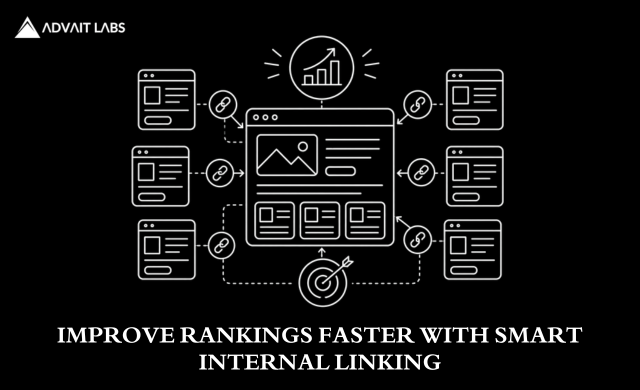
Internal linking strategy remains one of the most effective yet underutilized SEO techniques in 2026. While businesses often focus on publishing more content, building backlinks, or optimizing keywords, many overlook the power of strategically connecting pages within their own website.
A strong internal linking strategy helps search engines discover content, understand topic relationships, distribute authority across pages, and improve user navigation. It also plays a growing role in AI-powered search experiences, where search engines increasingly evaluate topical authority and content structure to determine expertise.
At Advait Technology Labs, internal linking is a core component of our SEO, AEO, and GEO strategies because it helps both users and search engines understand how information is connected across a website.
What Is an Internal Linking Strategy?
An internal linking strategy is the process of connecting related pages within the same website to improve navigation, strengthen topical relevance, distribute authority, and help search engines understand content relationships.
Unlike external links, which point to other websites, internal links connect your own pages together.
Examples include:
- Linking a blog post to a service page
- Connecting related articles within a topic cluster
- Linking category pages to supporting resources
- Adding contextual links throughout content
When implemented correctly, internal linking improves both SEO performance and user experience.
Does Internal Linking Improve SEO Rankings?
Yes, Internal Linking Can Improve Rankings
Internal linking helps search engines understand which pages are important and how topics relate to one another.
A strong internal linking strategy can:
- Improve crawlability
- Strengthen topical authority
- Pass authority between pages
- Increase page discoverability
- Improve user engagement
- Support better rankings
While internal links are not a replacement for quality content or backlinks, they often help websites maximize the ranking potential of existing content.
Why Is Internal Linking Important for SEO?
Search engines use internal links to understand website structure and content relationships.
Without clear internal linking, even valuable content can struggle to perform because search engines may not fully understand how pages connect.
A strategic internal linking structure helps search engines:
- Discover new content faster
- Prioritize important pages
- Understand content hierarchy
- Identify topic clusters
- Evaluate expertise within a subject area
This is particularly important as Google increasingly rewards topical authority and semantic relevance.
How Does Internal Linking Support Topical Authority?
Topical authority has become one of the strongest SEO signals in recent years.
Rather than evaluating individual pages in isolation, search engines now assess how comprehensively a website covers a topic.
For example, a website focused on SEO may publish content about:
- Technical SEO
- Local SEO
- SEO Audits
- Link Building
- Search Intent
- Core Web Vitals
- AI Search Optimization
A strong internal linking strategy connects these pages together, helping search engines understand that the website has expertise across the entire subject.
This creates a stronger knowledge structure that can improve rankings across multiple related keywords.
How Internal Linking Helps AI Search Engines Understand Content
The rise of AI-powered search has made internal linking even more valuable.
Platforms such as Google AI Overviews, ChatGPT Search, Gemini, Claude, and Perplexity increasingly analyze relationships between content rather than simply evaluating individual pages.
A well-organized internal linking strategy helps AI systems:
- Understand topic relationships
- Identify content clusters
- Recognize subject matter expertise
- Discover supporting resources
- Evaluate authority signals
When AI systems can clearly understand how content connects across your website, they are more likely to view your website as a trusted source of information.
Why Internal Linking Matters for GEO
Generative Engine Optimization (GEO) focuses on helping AI systems understand, trust, and reference website content.
Internal linking contributes directly to GEO because it creates clear relationships between pages.
For example:
Pillar Page
SEO Guide
Supporting Content
- Technical SEO Guide
- Local SEO Guide
- SEO Audit Checklist
- Search Intent Optimization
- Core Web Vitals Guide
These links help AI models understand the depth and breadth of your expertise.
The stronger your topic clusters, the easier it becomes for AI search platforms to identify your website as an authoritative source.
Types of Internal Links
Contextual Links
Contextual links appear naturally within page content.
For example, an article about SEO audits may link to a related article discussing technical SEO.
These links often provide the strongest SEO value because they reinforce topical relevance.
Navigation Links
Navigation menus help users and search engines understand website structure.
Examples include:
- Header menus
- Footer links
- Sidebar navigation
These links establish website hierarchy.
Related Content Links
Related article sections help users discover additional content while strengthening topic clusters.
They can improve both engagement and crawlability.
Breadcrumb Links
Breadcrumb navigation improves user experience and provides additional context for search engines.
Example:
Home > SEO > Technical SEO
Breadcrumbs help clarify page relationships.
What Are the Most Common Internal Linking Mistakes?
Many websites fail to benefit fully from internal linking because of avoidable mistakes.
Common issues include:
Creating Orphan Pages
Pages with no internal links pointing to them are difficult for search engines to discover.
Using Generic Anchor Text
Phrases like “click here” provide little context.
Descriptive anchor text helps search engines understand destination pages.
Linking Randomly
Internal links should support topical relevance rather than being added without strategy.
Ignoring High-Value Pages
Important service pages often receive too few internal links, limiting their SEO potential.
How Many Internal Links Should a Page Have?
There is no fixed number.
The goal is to add relevant internal links that improve user experience and support content discovery.
A page should contain enough internal links to:
- Help users navigate naturally
- Connect related content
- Support topical authority
- Guide visitors toward important pages
Quality and relevance matter far more than quantity.
How to Build an Effective Internal Linking Strategy
A successful internal linking strategy starts with website structure.
Create Topic Clusters
Group related content around a central topic.
Prioritize Important Pages
Direct internal links toward pages that support business goals.
Use Descriptive Anchor Text
Help users and search engines understand linked content.
Link Naturally
Add links where they genuinely improve the user experience.
Audit Regularly
Review internal links periodically to identify gaps, orphan pages, and new opportunities.
Internal Linking Strategy for SEO, AEO, and GEO
Modern search optimization extends beyond traditional rankings.
An effective internal linking strategy supports:
SEO
Improves crawlability, authority distribution, and rankings.
AEO
Helps answer engines understand relationships between content and identify authoritative answers.
GEO
Strengthens topic clusters and entity relationships used by AI-powered search systems.
Businesses that optimize for all three are better positioned for future search visibility.
Final Thoughts
Internal linking strategy is one of the most effective SEO opportunities available to businesses today. While often overlooked, internal links help search engines understand content relationships, strengthen topical authority, improve crawlability, and support better rankings.
As AI-powered search continues to evolve, internal linking will play an even greater role in helping search engines and answer engines understand website expertise.
Businesses that invest in a structured internal linking strategy today will be better positioned to improve SEO performance, strengthen AI search visibility, and build sustainable long-term authority online.
Frequently Asked Questions
What is an internal linking strategy?
An internal linking strategy is the process of connecting related pages within a website to improve SEO, navigation, and topical authority.
Does internal linking help SEO?
Yes. Internal linking helps search engines discover content, understand page relationships, distribute authority, and improve rankings.
How does internal linking support AI search?
Internal links help AI systems understand content relationships, topic clusters, and website expertise, which can improve AI search visibility.
What is an orphan page?
An orphan page is a webpage that has no internal links pointing to it, making it difficult for search engines and users to find.
How often should I audit internal links?
Most businesses should review internal links regularly, especially when publishing new content or expanding topic clusters.
