

Crawl Budget Explained: Why Google Isn’t Indexing Your Pages
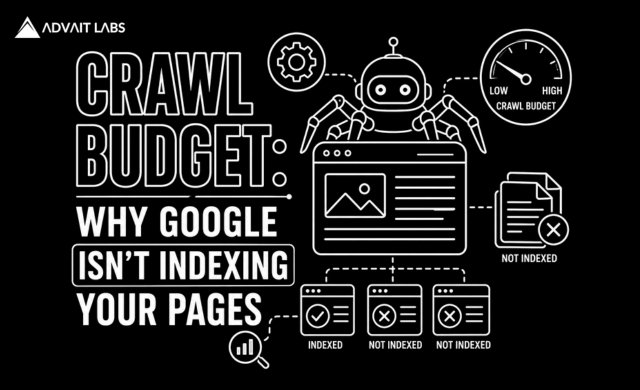
Crawl budget plays a critical role in determining how efficiently Google discovers and indexes your website. Many businesses assume that publishing new pages automatically guarantees they’ll appear in search results, but that’s not always the case. If Google isn’t regularly crawling your website, important pages may never get indexed, making them invisible to potential customers.
This issue becomes more common as websites grow. Large eCommerce stores, blogs, corporate websites, and service-based businesses often publish hundreds or thousands of pages. Without proper optimization, Google’s crawlers may spend their time on low-value pages while overlooking the content that matters most.
At Advait Technology Labs, we help businesses improve technical SEO by optimizing crawlability, indexability, and overall website performance. In this guide, you’ll learn what crawl budget is, why it matters, what affects it, and how to ensure Google indexes your most important pages.
What Is a Crawl Budget?
Crawl budget is the number of pages Googlebot is willing and able to crawl on your website within a given period.
Google doesn’t crawl every page on every website every day. Instead, it allocates a crawl budget based on factors such as your website’s size, authority, health, server performance, and the value of its content.
The more efficiently your website uses its crawl budget, the more likely important pages are to be discovered and indexed.
Why Does the Crawl Budget Matter?
If Google cannot crawl your pages, it cannot index them.
If pages aren’t indexed, they won’t appear in Google Search, regardless of how well they’re optimized.
Poor crawl budget management can result in:
- New pages taking weeks to index
- Important service pages being ignored
- Outdated pages remaining in Google’s index
- Reduced organic visibility
- Lower SEO performance
For larger websites, crawl budget optimization becomes an essential part of technical SEO.
How Does Google Determine Crawl Budget?
Google uses two primary factors when deciding how much of your website to crawl.
Crawl Capacity Limit
Google wants to crawl websites without overwhelming their servers.
If your website is slow or frequently returns server errors, Google may reduce its crawling activity.
Factors affecting crawl capacity include:
- Server response time
- Website speed
- Server reliability
- Error rates
- Hosting performance
Fast, stable websites typically receive more consistent crawling.
Crawl Demand
Google also evaluates how valuable your content appears.
Pages that are updated frequently or receive strong engagement are crawled more often.
Crawl demand increases when:
- New content is published regularly
- Existing pages are updated
- High-quality backlinks are earned
- Users frequently visit your pages
- Content demonstrates topical authority
The more useful Google considers your content, the more often it may revisit your website.
Why Google May Not Be Indexing Your Pages
Many businesses assume indexing problems are caused by crawl budget alone.
In reality, several technical issues may prevent indexing.
Low-Quality or Thin Content
Google prioritizes content that provides genuine value.
Pages with little original information or duplicate content may not be indexed.
Duplicate Pages
Multiple versions of similar pages can waste crawl budget.
Examples include:
- URL parameters
- Duplicate category pages
- Printer-friendly versions
- Multiple HTTP and HTTPS versions
Proper canonicalization helps Google identify the preferred version.
Broken Internal Links
If Google cannot easily discover pages through your internal linking structure, those pages may remain uncrawled.
Strong internal linking improves crawl efficiency.
Orphan Pages
Orphan pages have no internal links pointing to them.
Without internal links, Google may never discover these pages.
Every important page should be accessible through your website’s navigation or contextual links.
Incorrect Robots.txt Rules
Sometimes websites accidentally block Googlebot from crawling important sections.
Always review your robots.txt file after website updates.
Noindex Tags
A page marked with a “noindex” directive tells Google not to include it in search results.
Businesses sometimes unintentionally apply noindex tags to important pages.
Signs You May Have Crawl Budget Issues
You may need to investigate crawl budget if you notice:
- New pages remain unindexed for weeks
- Google Search Console reports “Discovered – currently not indexed”
- Large numbers of excluded pages
- Crawl statistics declining
- Important pages missing from Google Search
These signals often indicate inefficient crawling or technical SEO issues.
How to Optimize Crawl Budget
Improving crawl budget isn’t about increasing Google’s crawl frequency—it is about helping Google crawl the right pages more efficiently.
Improve Internal Linking
A strong internal linking structure helps Google discover important content faster.
Link related articles, service pages, and pillar content together naturally.
Remove Low-Value Pages
Delete, merge, or redirect pages that no longer provide value.
Examples include:
- Thin content
- Duplicate pages
- Outdated announcements
- Expired campaign pages
Reducing unnecessary pages allows Google to focus on high-value content.
Optimize XML Sitemaps
Your XML sitemap should include only pages you want Google to index.
Remove:
- Redirects
- Noindex pages
- Broken URLs
An optimized sitemap improves crawl efficiency.
Improve Website Speed
Faster websites are easier for Googlebot to crawl.
Improve performance by:
- Compressing images
- Reducing JavaScript
- Using browser caching
- Optimizing Core Web Vitals
- Choosing reliable hosting
Website speed benefits both users and search engines.
Fix Crawl Errors
Monitor Google Search Console regularly for:
- 404 errors
- Server errors
- Redirect chains
- Blocked resources
Resolving crawl errors helps Google access your content more efficiently.
Update Important Content
Google tends to revisit websites that publish fresh, valuable content.
Regular updates demonstrate that your website remains active and relevant.
Crawl Budget and Large Websites
Crawl budget has the greatest impact on websites with thousands of URLs.
Examples include:
- eCommerce stores
- News websites
- Job portals
- Marketplace platforms
- Large blogs
- Enterprise websites
Smaller websites with fewer than a few hundred well-managed pages generally don’t need to worry extensively about crawl budget, provided their technical SEO is healthy.
Crawl Budget and Technical SEO
Crawl budget is closely connected to other technical SEO factors.
Optimizing crawl efficiency often involves improving:
- Site architecture
- Internal linking
- XML sitemaps
- Canonical tags
- Core Web Vitals
- Mobile usability
- Structured data
Together, these elements help search engines crawl and understand your website more effectively.
How Crawl Budget Supports AEO and GEO
As AI-powered search continues to grow, efficient crawling becomes even more important.
Answer engines and generative search systems rely on regularly crawled, well-structured, and up-to-date content.
Improving crawl budget helps ensure your content remains discoverable across:
- Traditional Google Search
- AI Overviews
- Answer Engine Optimization (AEO)
- Generative Engine Optimization (GEO)
A technically optimized website increases the likelihood that AI systems can access and reference your content.
Final Thoughts
Crawl budget may not be the first SEO metric businesses think about, but it can significantly influence how quickly and effectively Google indexes your website.
By improving site architecture, strengthening internal links, removing low-value pages, fixing crawl errors, and maintaining strong technical SEO, businesses can make better use of their crawl budget and improve long-term search visibility.
If your website has important pages that aren’t appearing in Google Search, it’s time to look beyond content and examine how Google is crawling your site.
At Advait Technology Labs, we help businesses optimize every aspect of technical SEO—from crawl budget and indexing to Core Web Vitals and AI-ready website architecture—so your content has the best opportunity to rank and grow.
Frequently Asked Questions
What is the crawl budget?
Crawl budget is the number of pages Googlebot is willing and able to crawl on your website within a specific period.
Why isn’t Google indexing my pages?
Common reasons include thin content, duplicate pages, crawl errors, poor internal linking, noindex tags, and inefficient use of crawl budget.
Does the crawl budget affect small websites?
For most small websites, crawl budget is rarely a major issue. However, good technical SEO practices still help Google crawl and index pages more efficiently.
How can I improve the crawl budget?
Improve website speed, strengthen internal linking, remove low-value pages, optimize XML sitemaps, fix crawl errors, and publish high-quality content regularly.
Can Advait Technology Labs help improve website indexing?
Yes. Advait Technology Labs provides technical SEO audits, crawl analysis, indexing optimization, website architecture improvements, and ongoing SEO support to help businesses maximize their search visibility.
