

Content Audits: How to Know What to Keep, Update, or Delete
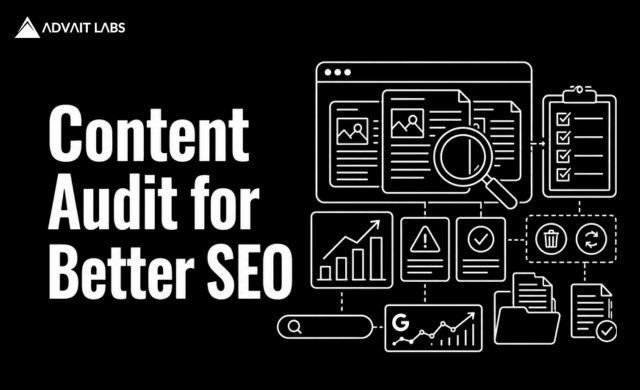
Content Audit is one of the most valuable yet often overlooked SEO practices for businesses in 2026. Publishing new content consistently is important, but if outdated, low-performing, or duplicate pages remain on your website, they can weaken your overall SEO performance. Search engines increasingly reward websites that maintain accurate, relevant, and high-quality content while reducing unnecessary clutter. At Advait Technology Labs, we perform comprehensive content audits to help businesses improve search visibility, strengthen topical authority, and enhance user experience. In this guide, you’ll learn how to conduct a content audit, decide what to keep, update, consolidate, or delete, and build a stronger content strategy that supports SEO, AEO, and GEO.
What Is a Content Audit?
A Content Audit is the process of reviewing all the content on your website to evaluate its performance, relevance, quality, and alignment with your business goals.
The objective is to identify which pages should:
- Be kept as they are
- Be updated with fresh information
- Be merged with similar content
- Be redirected
- Be removed if they no longer provide value
A regular content audit helps improve both search performance and user experience.
Why Is a Content Audit Important?
Over time, websites naturally accumulate outdated and underperforming content.
Without regular audits, businesses may face issues such as:
- Declining organic traffic
- Keyword cannibalization
- Duplicate content
- Broken internal links
- Outdated information
- Poor user engagement
- Reduced crawl efficiency
A content audit ensures your website remains relevant, authoritative, and easy for search engines to understand.
Benefits of Conducting a Content Audit
A well-executed content audit provides several long-term advantages.
Improve Organic Rankings
Updating valuable pages often delivers faster SEO improvements than publishing entirely new content.
Strengthen Topical Authority
Removing weak or duplicate content allows your strongest pages to become more authoritative.
Improve User Experience
Visitors are more likely to trust websites that provide current, accurate, and comprehensive information.
Increase Crawl Efficiency
Removing unnecessary pages helps search engines focus on your most valuable content.
Support Better Conversions
Updated service pages, blogs, and landing pages often generate more enquiries and sales.
Step 1: Create a Complete Content Inventory
Start by listing every indexable page on your website.
Include:
- Service pages
- Blog articles
- Landing pages
- Product pages
- Case studies
- Resource pages
Useful tools include:
- Google Search Console
- Google Analytics 4
- Screaming Frog SEO Spider
- XML Sitemap
- CMS exports
This inventory becomes the foundation of your audit.
Step 2: Review Performance Metrics
Evaluate each page using measurable data.
Important metrics include:
- Organic traffic
- Keyword rankings
- Click-through rate (CTR)
- Bounce rate
- Average engagement time
- Conversions
- Backlinks
- Indexed status
Pages with declining performance often require updates rather than immediate deletion.
Step 3: Evaluate Content Quality
Ask the following questions for every page:
- Is the information accurate?
- Does it satisfy search intent?
- Is it easy to read?
- Does it demonstrate expertise?
- Is the content unique?
- Are statistics and examples current?
High-quality content should answer user questions better than competing pages.
Step 4: Identify Outdated Content
Some content naturally becomes outdated.
Examples include:
- Old statistics
- Expired promotions
- Discontinued services
- Obsolete SEO advice
- Previous Google algorithm information
Updating outdated content often provides significant ranking improvements.
Step 5: Look for Duplicate and Similar Content
Multiple pages targeting nearly identical topics can compete against each other.
Examples include:
- Similar blog posts
- Duplicate service pages
- Multiple keyword variations
- Repeated location pages
Where appropriate, merge related pages into one comprehensive resource and use 301 redirects to preserve SEO value.
Step 6: Review Internal Linking
Every important page should be connected through relevant internal links.
Check whether pages:
- Link to supporting content
- Receive internal links from other pages
- Use descriptive anchor text
- Support topic clusters
Strong internal linking improves crawlability and topical authority.
Step 7: Decide Whether to Keep, Update, Merge, or Delete
A successful Content Audit ends with clear decisions.
Keep
Retain pages that:
- Generate consistent traffic
- Rank well
- Receive backlinks
- Remain accurate
- Support business goals
Update
Refresh pages that:
- Have declining rankings
- Contain outdated information
- Need stronger SEO optimization
- Require additional sections or FAQs
Merge
Combine pages when:
- Topics overlap significantly
- Keyword cannibalization exists
- Users benefit from one comprehensive resource
Delete or Redirect
Consider removing pages that:
- Receive no traffic
- Offer little value
- Duplicate other content
- No longer align with your services
Always use appropriate redirects when removing valuable URLs.
How Often Should You Perform a Content Audit?
The frequency depends on your website size.
As a general guideline:
- Small websites: Every 6–12 months
- Medium-sized business websites: Every 6 months
- Large websites: Every quarter
- News or publishing websites: Monthly reviews
Regular audits keep your content competitive and relevant.
Best Tools for Content Audits
Several tools simplify the auditing process.
Popular options include:
- Google Search Console
- Google Analytics 4
- Screaming Frog SEO Spider
- Ahrefs
- SEMrush
- Google PageSpeed Insights
- Microsoft Clarity
Using multiple tools provides a complete picture of content performance.
Final Thoughts
A Content Audit is one of the smartest investments businesses can make to improve long-term SEO performance. Rather than continuously publishing new content, regularly reviewing existing pages helps identify opportunities to strengthen rankings, eliminate duplicate content, improve user experience, and increase conversions.
By knowing which pages to keep, update, merge, or remove, businesses create a cleaner, more authoritative website that performs better in traditional search engines and AI-powered search experiences.
If your website contains outdated or underperforming content, Advait Technology Labs can help you conduct a comprehensive content audit and build a content strategy that supports lasting organic growth.
Visit Advait Technology Labs Today!
Frequently Asked Questions
What is a Content Audit?
A Content Audit is the process of reviewing all website content to evaluate its quality, performance, accuracy, and relevance, helping determine whether each page should be kept, updated, merged, or removed.
Why is a Content Audit important for SEO?
A Content Audit improves search rankings by removing low-value content, updating outdated pages, strengthening internal linking, and enhancing overall website quality.
How often should I perform a Content Audit?
Most business websites should perform a Content Audit every six to twelve months, while larger or frequently updated websites may benefit from quarterly reviews.
Which tools are best for conducting a Content Audit?
Google Search Console, Google Analytics 4, Screaming Frog SEO Spider, Ahrefs, SEMrush, Google PageSpeed Insights, and Microsoft Clarity are commonly used for comprehensive content audits.
