

How to Do a Competitor SEO Gap Analysis (Step-by-Step)
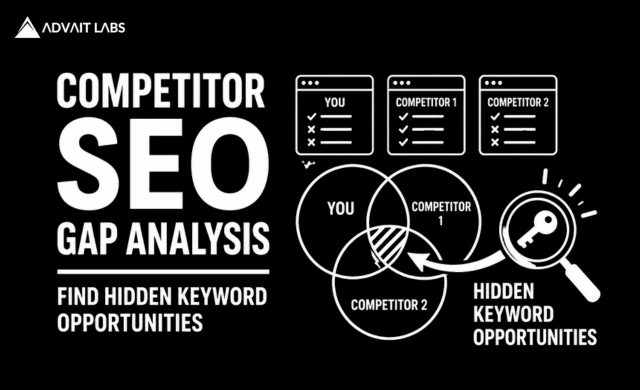
Competitor SEO Gap Analysis is one of the most effective ways to uncover missed SEO opportunities and improve your website’s search performance. Instead of guessing which keywords or content will drive results, a competitor SEO gap analysis helps you identify what your competitors are ranking for that your website is missing. By analyzing keyword gaps, content strategies, backlinks, and technical SEO, businesses can make data-driven decisions that lead to better rankings and more qualified traffic. At Advait Technology Labs, we help businesses perform comprehensive competitor SEO gap analyses to build stronger SEO, AEO, and GEO strategies that deliver sustainable organic growth.
What Is a Competitor SEO Gap Analysis?
A Competitor SEO Gap Analysis is the process of comparing your website with competing websites to identify opportunities for improvement.
It helps you discover:
- Keywords your competitors rank for but you don’t
- Content topics you’re missing
- Backlink opportunities
- Technical SEO weaknesses
- Search intent gaps
- Areas where competitors provide better user experiences
The goal isn’t to copy competitors—it’s to learn from their success and create even better content and experiences.
Why Is Competitor SEO Gap Analysis Important?
Search rankings are highly competitive.
Even if your website is well optimized, competitors may still outperform you because they have:
- More comprehensive content
- Better keyword targeting
- Stronger internal linking
- Higher-quality backlinks
- Better technical SEO
A Competitor SEO Gap Analysis reveals these differences so you can prioritize improvements that have the greatest impact.
Benefits of a Competitor SEO Gap Analysis
Performing a competitor SEO gap analysis offers several long-term benefits.
Discover New Keyword Opportunities
Competitor research helps uncover keywords you may never have considered.
These include:
- Long-tail keywords
- Commercial intent keywords
- Informational queries
- Local search terms
- Question-based searches
Adding these opportunities to your content strategy can increase organic traffic.
Build Stronger Content
Content gaps become obvious when comparing your website with leading competitors.
You may discover missing:
- Guides
- FAQs
- Tutorials
- Case studies
- Comparison pages
- Industry resources
Filling these gaps strengthens topical authority.
Improve Search Rankings
By optimizing pages your competitors already rank for, you increase your chances of earning similar or higher positions in search results.
Strengthen Topical Authority
Publishing comprehensive content around related topics signals expertise to Google.
This is increasingly important for modern SEO.
Support Better Business Decisions
Rather than relying on assumptions, competitor analysis provides data-backed insights that guide your SEO investments.
Step 1: Identify Your SEO Competitors
Your business competitors are not always your SEO competitors.
Search for your primary services and note the websites consistently appearing on the first page.
For example, if you provide digital marketing services, your SEO competitors may include agencies that dominate search results—even if they operate in different cities.
Focus on competitors with:
- Similar target audiences
- Comparable services
- Strong organic visibility
Step 2: Analyze Competitor Keywords
The next step is identifying keywords your competitors rank for.
Look for:
- High-volume keywords
- Low-competition opportunities
- Commercial keywords
- Informational searches
- Long-tail keywords
Prioritize keywords that align with your business goals rather than targeting every keyword your competitors use.
Remember that relevance is more valuable than search volume alone.
Step 3: Find Content Gaps
Compare your website’s content with competitor websites.
Ask questions like:
- Which topics have they covered that you haven’t?
- Do they publish more comprehensive guides?
- Are they answering customer questions more effectively?
- Do they have helpful resources missing from your website?
Content gaps often reveal opportunities for new blog posts, service pages, and pillar content.
Step 4: Evaluate Backlink Opportunities
Backlinks remain an important ranking factor.
Review where your competitors earn links.
Common backlink sources include:
- Industry blogs
- Business directories
- Guest posts
- News websites
- Resource pages
- Local organizations
Focus on earning relevant, high-quality backlinks rather than simply increasing the number of links.
Step 5: Review Technical SEO
Technical SEO often separates top-ranking websites from average performers.
Compare factors such as:
- Website speed
- Mobile responsiveness
- Core Web Vitals
- Internal linking
- Crawlability
- XML sitemaps
- Structured data
- HTTPS security
Even excellent content can struggle if technical SEO issues prevent Google from properly crawling and indexing your website.
Step 6: Analyze Search Intent
Understanding search intent is one of the most valuable parts of a Competitor SEO Gap Analysis.
Look beyond keywords.
Determine why competitors rank.
Are they answering:
- Informational intent
- Commercial intent
- Transactional intent
- Navigational intent
Matching user intent often matters more than simply including the right keywords.
Step 7: Prioritize High-Impact Opportunities
Not every SEO gap requires immediate attention.
Prioritize opportunities based on:
- Business relevance
- Search volume
- Ranking difficulty
- Revenue potential
- Existing authority
A strategic roadmap produces better long-term results than trying to fix everything at once.
Best Tools for Competitor SEO Gap Analysis
Several SEO tools make competitor analysis easier.
Popular options include:
- Google Search Console
- Google Analytics
- Ahrefs
- SEMrush
- Screaming Frog SEO Spider
- Google Keyword Planner
- PageSpeed Insights
These tools help identify keyword gaps, backlinks, technical issues, and performance opportunities.
How Advait Technology Labs Helps Businesses Outrank Competitors
At Advait Technology Labs, we don’t rely on guesswork.
We use advanced SEO research and competitor intelligence to develop customized strategies that improve rankings and drive measurable business growth.
Our SEO services include:
- Competitor SEO gap analysis
- Keyword research
- Technical SEO audits
- Content strategy
- Topic cluster planning
- Internal linking optimization
- AEO optimization
- GEO optimization
- Website performance analysis
- Ongoing SEO monitoring
Our data-driven approach helps businesses identify untapped opportunities and build long-term search authority.
Final Thoughts
A Competitor SEO Gap Analysis is one of the smartest investments businesses can make in their SEO strategy. By understanding where competitors outperform your website, you can uncover valuable keyword opportunities, strengthen your content, improve technical SEO, and create a better user experience.
Rather than chasing rankings through guesswork, competitor analysis provides a clear roadmap for sustainable organic growth. Combined with a strong SEO, AEO, and GEO strategy, it helps businesses stay competitive in both traditional search engines and AI-powered search platforms.
If you’re ready to identify hidden SEO opportunities and outperform your competitors, Advait Technology Labs can help you build a data-driven strategy that delivers long-term results.
Frequently Asked Questions
What is a Competitor SEO Gap Analysis?
A Competitor SEO Gap Analysis compares your website with competing websites to identify missing keywords, content opportunities, backlink gaps, and technical SEO improvements that can boost search performance.
Why is a Competitor SEO Gap Analysis important?
It helps businesses understand why competitors rank higher and provides actionable insights to improve content, SEO strategy, and organic visibility.
How often should I perform a Competitor SEO Gap Analysis?
It’s recommended to perform a competitor SEO gap analysis every three to six months or whenever you notice significant changes in rankings or competitor activity.
Which tools are best for Competitor SEO Gap Analysis?
Popular tools include Google Search Console, Google Analytics, Ahrefs, SEMrush, Screaming Frog SEO Spider, Google Keyword Planner, and PageSpeed Insights.
