

How Link Building Supports SEO Authority and Search Rankings
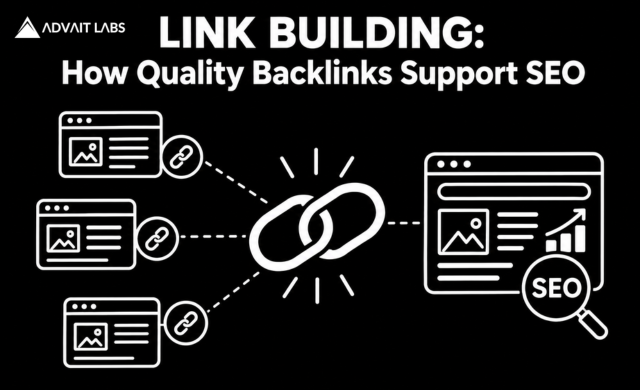
Creating useful content is only one part of SEO. Search engines also need signals that help them understand how a website fits within the wider web.
This is where link building comes into the picture.
Link building is the process of earning or acquiring links from other websites to your own. These links can help search engines discover pages and understand relationships between websites and topics. More importantly, links from relevant, trustworthy websites can serve as signals of recognition or endorsement.
However, link building is not simply about collecting as many backlinks as possible.
A website with hundreds of irrelevant or manipulative links does not automatically become more authoritative. A sustainable strategy focuses on relevant, useful, editorially earned links and avoids tactics intended to manipulate search rankings.
Quick Answer: What Is Link Building?
Link building is the process of earning or obtaining hyperlinks from external websites that point to pages on your website.
These external links are commonly called backlinks.
For example:
Website A → links to → Website B
Website B receives a backlink from Website A.
When the linking page is relevant and the link is naturally placed because the destination provides useful information, it can contribute to the overall link profile of the receiving website.
Link building is generally considered part of off-page SEO.
Why Does Link Building Matter for SEO?
Links play several roles within the web ecosystem.
They can help:
- Search engines discover content
- Users navigate between relevant resources
- Websites establish relationships
- Content receive referral traffic
- Search engines understand the broader context of pages
Google has historically described links as one of the signals it uses for ranking and discovery, while also emphasizing that not all links are equally valuable.
This means link quality and relevance matter more than simply increasing backlink numbers.
What Is a Backlink?
A backlink is a hyperlink on another website that points to your website.
For example:
A technology publication discusses website accessibility and links to your accessibility guide.
That link is a backlink to your website.
Backlinks can come from:
- Industry publications
- News websites
- Professional organizations
- Relevant blogs
- Resource pages
- Business directories
- Partner websites
- Educational resources
- Industry communities
The value of a backlink depends on factors such as relevance, placement, context, and whether the link was obtained naturally.
Link Building and Domain Authority
You mentioned Domain Authority, so there is an important distinction to make.
Domain Authority (DA) is not a Google ranking factor.
Domain Authority is a third-party metric developed by Moz to estimate how likely a domain may be to rank in search results based largely on its link profile.
Other SEO platforms have their own metrics, such as:
- Authority Score
- Domain Rating
- Trust Flow
These metrics are useful for SEO analysis, but they should not be treated as Google’s own authority score.
Therefore, increasing DA should not be the primary objective of link building.
The real goal is to build a strong, relevant backlink profile that supports your website’s visibility, discoverability, and reputation.
How Link Building Can Support Rankings
There are several ways link building can contribute to SEO.
1. Links Can Help Search Engines Discover Pages
Search engines use links to discover and navigate between webpages.
If another website links to a useful page on your website, that link can provide another pathway to the content.
This is especially useful for pages that aren’t strongly connected through your site’s existing architecture.
2. Links Can Transfer Signals Between Pages
Links can help search engines understand relationships between pages and websites.
A backlink from a relevant website can provide contextual information about what the linked page represents.
For example, imagine a digital marketing publication links to your detailed guide about:
Technical SEO
The surrounding content and link destination can provide useful context about the subject of your page.
3. Relevant Links Can Generate Referral Traffic
SEO professionals sometimes focus entirely on ranking value and overlook another major benefit of backlinks:
referral traffic.
A link on a website that your target audience already reads can send visitors directly to your website.
For example:
A business publication → your case study → potential customer
Even if the link itself doesn’t result in a measurable ranking improvement, the referral traffic can still have business value.
Relevance Matters in Link Building
Imagine you operate a web development company.
A backlink from a respected technology website discussing web development is contextually relevant.
A random backlink from an unrelated website about an entirely different subject may provide much less value.
This is why link building should prioritize:
Relevance + Quality + Context
rather than:
Quantity alone
A smaller number of genuinely relevant links can be more useful than a large collection of unrelated links.
What Makes a Quality Backlink?
There isn’t a single formula that determines whether a backlink is “good.”
However, useful links commonly have characteristics such as:
Relevant Website
The linking website covers a subject related to your industry or the page being linked to.
Relevant Context
The link makes sense within the surrounding content.
Genuine Editorial Placement
The link exists because it is useful to readers rather than being placed solely to manipulate rankings.
Useful Destination
The page being linked to provides something valuable to the visitor.
Real Audience
A website with actual readers and genuine content can provide referral value in addition to SEO value.
Link Building vs Buying Backlinks
There is a major difference between earning links and purchasing links specifically to manipulate rankings.
Buying links that pass ranking credit in violation of search engine guidelines can create risk.
Businesses should be cautious of services promising:
- “10,000 backlinks”
- “Guaranteed Google rankings”
- “Instant DA improvement”
- “100 high-authority links in 7 days”
- Automated backlink packages
Large backlink quantities do not guarantee better rankings.
In fact, aggressive or manipulative link acquisition can create problems for a website.
Common Link Building Strategies
A sustainable link building strategy can use several approaches.
1. Create Link-Worthy Content
One of the strongest approaches is creating resources that people naturally want to reference.
Examples include:
- Original research
- Industry statistics
- Detailed guides
- Research studies
- Free tools
- Calculators
- Original data
- Comprehensive resources
- Expert interviews
- Unique visual resources
For example, a detailed SEO Audit Checklist may naturally attract links from websites discussing SEO.
2. Digital PR
Digital PR involves creating stories, insights, research, or expert commentary that online publications may want to cover.
For example, a company could publish original research about:
Website Performance Trends Among Small Businesses
If the findings are genuinely useful, relevant publications may reference the research and link back to the original source.
This combines:
Content + PR + Link Earning
3. Guest Contributions
Contributing useful, original content to relevant publications can sometimes provide opportunities to gain links.
However, guest posting becomes problematic when the primary purpose is manipulating links through large-scale article campaigns.
The focus should remain on contributing genuine value to the publication’s audience.
4. Linkable Resources
Create resources that naturally function as references.
Examples:
- SEO checklists
- Industry glossaries
- Research reports
- Templates
- Original studies
- Comprehensive guides
- Data visualizations
- Technical documentation
These resources can become destinations other websites want to reference.
5. Unlinked Brand Mentions
Sometimes another website mentions your company but doesn’t link to your website.
For example:
“Advait Technology Labs provides digital marketing services.”
If the mention is relevant and the publisher is open to adding a reference, you can politely request a link.
This isn’t guaranteed to result in a backlink, but it can be a useful outreach opportunity.
6. Resource Page Outreach
Some websites maintain resource pages containing useful links for their audience.
If your content genuinely fills a missing resource, you can contact the website owner.
The key is relevance.
Don’t send the same generic email to hundreds of unrelated websites.
7. Broken Link Opportunities
A website may contain an outdated or broken link to a resource.
If you have a genuinely useful replacement resource, you can notify the site owner.
The process is:
Find broken resource → Create/identify useful replacement → Contact website → Suggest resource
This works best when your page genuinely improves the existing resource.
Internal Links vs Backlinks
These two concepts are often confused.
Internal Link
A link from one page on your website to another page on the same website.
Your Website → Your Website
Example:
Homepage → SEO Services
Backlink
A link from another website to your website.
External Website → Your Website
Both are important, but they serve different purposes.
Internal links help organize your website and distribute navigation/context within your own site.
Backlinks can provide external discovery, referral traffic, and authority-related signals.
Anchor Text in Link Building
Anchor text is the clickable text used for a hyperlink.
For example:
Learn more about technical SEO
The clickable phrase is the anchor text.
Anchor text can provide context about the linked page.
However, businesses shouldn’t attempt to manipulate rankings by forcing exact-match keyword anchor text into every backlink.
A natural backlink profile can contain different types of anchor text, including:
- Brand names
- URLs
- Natural phrases
- Partial keyword phrases
- Descriptive text
The link should make sense to the reader first.
Why Too Many Low-Quality Links Can Be a Problem
A common misconception is:
More backlinks = higher rankings.
SEO doesn’t work that simply.
A large number of low-quality, irrelevant, or manipulative links may not provide meaningful value.
Examples of risky practices include:
- Automated link generation
- Link farms
- Spammy directory submissions
- Private blog networks designed to manipulate rankings
- Excessive exact-match anchor text
- Large-scale paid links intended to pass ranking credit
- Comment spam
- Forum spam
The objective should be earning meaningful references, not manufacturing backlink counts.
Link Building and Topical Authority
Link building can also complement a broader topical SEO strategy.
Suppose your website specializes in digital marketing.
You publish comprehensive resources covering:
- SEO
- Local SEO
- Google Ads
- Content Marketing
- Website Design
- Analytics
- AEO
- GEO
If relevant websites reference these resources, external signals can reinforce the fact that your website produces useful material in these areas.
However, backlinks don’t automatically establish topical authority.
The underlying content still needs to be:
- Useful
- Relevant
- Accurate
- Well structured
- Comprehensive where appropriate
How to Build Links Without Sacrificing Content Quality
A common mistake is separating content creation and link building.
Instead, combine them.
Before Creating Content
Ask:
Would another website have a reason to reference this?
During Content Creation
Include:
- Original insights
- Useful examples
- Data
- Expert commentary
- Practical frameworks
- Unique information
After Publishing
Promote the resource to:
- Relevant publications
- Industry professionals
- Researchers
- Communities
- Existing business relationships
This creates a more natural link-earning process.
A Practical Link Building Process
Step 1: Define Your Target Page
Choose the page that should receive relevant links.
It might be:
- Service page
- Research report
- Guide
- Tool
- Blog article
- Resource page
Step 2: Identify Relevant Link Opportunities
Look for websites that:
- Cover your industry
- Discuss related subjects
- Reference similar resources
- Have an audience relevant to your business
Step 3: Evaluate the Website
Don’t evaluate a potential link based only on DA.
Check:
- Relevance
- Content quality
- Audience
- Editorial standards
- Organic visibility
- Existing outbound links
- Overall website quality
Step 4: Create a Useful Reason to Link
Ask:
Why would this website want to reference my page?
If the answer is simply:
“Because I want a backlink,”
the opportunity probably needs more work.
Create something genuinely useful.
Step 5: Conduct Personalized Outreach
Explain:
- Why you’re contacting them
- Which resource you’re referring to
- Why it may help their audience
Avoid generic mass emails.
Step 6: Track Results
Monitor:
- Referring domains
- New backlinks
- Referral traffic
- Target page performance
- Link relevance
- Lost backlinks
Don’t judge the campaign only by the number of links acquired.
Link Building Metrics to Monitor
Some useful metrics include:
| Metric | Why It Matters |
|---|---|
| Referring Domains | Shows how many distinct websites link to you |
| Backlinks | Shows total discovered links |
| Referral Traffic | Measures visitors arriving through links |
| Linking Page Relevance | Helps assess contextual value |
| Lost Backlinks | Identifies links that disappeared |
| Target Page Performance | Helps monitor the linked page |
| Brand Mentions | Identifies additional outreach opportunities |
Third-party authority metrics can be useful for comparisons, but they shouldn’t be treated as direct Google ranking scores.
Does Link Building Still Matter in 2026?
Yes, links remain part of how search engines discover and understand content across the web.
But the role of link building has evolved.
Modern SEO shouldn’t be:
“How many backlinks can we get?”
It should be:
“What valuable resources can we create that relevant websites would genuinely want to reference?”
That shift is important.
Quality, relevance, context, and usefulness should guide the strategy.
Link Building for Local Businesses
Local businesses can also use link building to strengthen their online presence.
Potential opportunities include:
- Local publications
- Industry associations
- Community organizations
- Local business directories
- Event websites
- Business partners
- Relevant local resources
For a Hyderabad-based digital marketing or technology company, for example, relevant local business publications and technology communities may provide more meaningful opportunities than generic global backlink directories.
Local link building should focus on genuine local relevance, not simply obtaining links because a website has a city name in its domain.
Link Building and AEO/GEO
Search is increasingly becoming more answer-oriented, with users receiving direct responses rather than always clicking through traditional blue links.
A strong link-building strategy can complement AEO and GEO by helping build the broader web presence of a brand and its resources.
However, backlinks alone do not guarantee that a website will be cited in AI-generated answers.
Content should still provide:
- Clear answers
- Reliable information
- Strong topical coverage
- Useful supporting evidence
- Clear authorship where appropriate
- Well-organized information
Link building should therefore be part of a broader SEO + content + authority strategy.
7 Link Building Mistakes to Avoid
1. Focusing Only on Domain Authority
DA is a third-party metric, not a Google ranking factor.
2. Buying Large Backlink Packages
Quantity doesn’t guarantee quality.
3. Ignoring Relevance
An unrelated backlink isn’t automatically valuable because the linking domain has a high authority metric.
4. Using Exact-Match Anchor Text Everywhere
This can create an unnatural link profile.
5. Automating Outreach
Personalized, relevant outreach is generally more useful than mass-generated requests.
6. Building Links to Only One Page
A natural website backlink profile can include links to different useful resources.
7. Forgetting Referral Traffic
A relevant backlink can have business value even beyond SEO.
How Advait Technology Labs Approaches Link Building
For businesses looking to improve organic visibility, Advait Technology Labs can integrate link building into a broader digital marketing strategy.
A sustainable approach can combine:
- SEO strategy
- Content marketing
- Technical SEO
- On-page optimization
- Keyword research
- Competitor analysis
- Content development
- Link-building opportunities
- Performance tracking
The focus should be on creating useful content and earning relevant references rather than chasing backlink volume.
Link building works best when it supports a website that already provides a strong user experience, clear information, technically sound pages, and valuable content.
Final Thoughts
Link Building remains an important part of SEO, but successful link building is not about collecting the largest possible number of backlinks.
The stronger approach is to earn links from relevant websites by creating resources that deserve to be referenced.
Focus on:
Relevant websites + useful content + natural links + genuine outreach
rather than:
High backlink count + artificial links + exact-match anchors
Also remember that Domain Authority is a third-party SEO metric, not a Google ranking factor. Your primary objective should be improving your website’s overall search visibility and creating valuable resources for your audience.
When link building is combined with strong technical SEO, useful content, internal linking, and a well-structured website, it becomes part of a much broader organic growth strategy.
Visit Advait Technology Labs Today!
Frequently Asked Questions
1. What is link building in SEO?
Link building is the process of earning or obtaining hyperlinks from external websites to pages on your own website. These links are called backlinks and can support discovery, referral traffic, and SEO signals.
2. Does link building improve Google rankings?
Link building can contribute to SEO because links are among the signals search engines use to discover and evaluate webpages. However, obtaining backlinks does not guarantee higher rankings.
3. Does link building increase Domain Authority?
Earning quality backlinks may increase a website’s Domain Authority as measured by Moz, but Domain Authority is a third-party metric and is not a Google ranking factor.
4. How many backlinks does a website need?
There is no universal number of backlinks required to rank. The relevance, quality, context, and usefulness of links matter more than reaching an arbitrary backlink target.
5. What is the safest way to build backlinks?
Creating genuinely useful, link-worthy resources and earning relevant editorial links is a sustainable approach. Businesses should avoid manipulative link schemes, automated spam, and large-scale link acquisition intended primarily to influence search rankings.
