

How Page Speed Impacts Rankings on Mobile
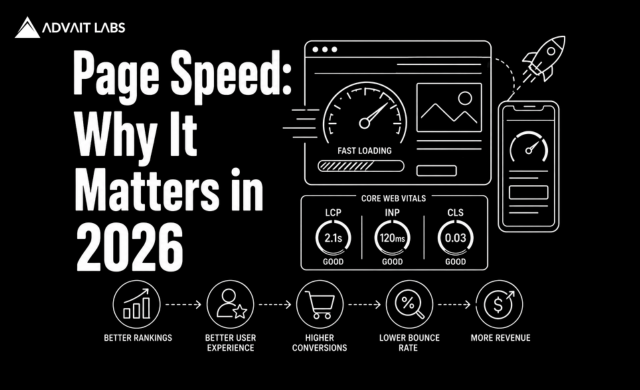
Page Speed continues to play a crucial role in mobile search rankings in 2026. As more users browse, shop, and interact with businesses on smartphones, Google places greater emphasis on delivering fast, seamless mobile experiences. A slow-loading website not only frustrates users but also reduces engagement, increases bounce rates, and limits your chances of ranking well in search results. At Advait Technology Labs, we build fast, SEO-friendly, and mobile-optimized websites that help businesses improve search visibility, user experience, and conversions. In this guide, you’ll learn how page speed affects mobile rankings, why it matters more than ever, and what you can do to optimize your website for long-term success.
Does Page Speed Still Matter in 2026?
Yes. Page Speed remains an important ranking factor because it directly affects user experience. While Google considers hundreds of ranking signals, page speed influences how easily users can access your content, interact with your website, and complete desired actions.
A fast website helps:
- Improve mobile rankings
- Reduce bounce rates
- Increase user engagement
- Boost conversion rates
- Support Core Web Vitals
- Enhance customer satisfaction
Rather than being an isolated ranking factor, page speed contributes to the overall quality of your website.
Why Google Prioritizes Mobile Page Speed
Most internet users now access websites from mobile devices.
Google’s mobile-first indexing means the search engine primarily evaluates the mobile version of your website when determining rankings.
A slow mobile website creates several problems:
- Users leave before the page loads.
- Visitors engage with fewer pages.
- Conversion rates decline.
- Customer trust decreases.
Google aims to deliver the best possible experience to users, making fast-loading mobile websites more competitive in search results.
How Mobile-First Indexing Changed SEO
Before mobile-first indexing, desktop versions of websites were the primary source for ranking evaluation.
Today, Google mainly analyzes:
- Mobile responsiveness
- Mobile page speed
- Mobile usability
- Content accessibility
- Mobile navigation
If your mobile website performs poorly, your rankings may suffer—even if your desktop experience is excellent.
How Slow Page Speed Affects Rankings
A slow website impacts SEO both directly and indirectly.
Higher Bounce Rates
Visitors expect websites to load quickly.
When pages take too long to appear, many users leave without interacting with your content.
Higher bounce rates often indicate a poor user experience.
Reduced User Engagement
Slow websites reduce:
- Average session duration
- Pages viewed per visit
- Form submissions
- Product purchases
Lower engagement signals that users are not finding the experience satisfactory.
Lower Crawl Efficiency
Google allocates a limited crawl budget to every website.
If pages respond slowly, search engine crawlers may index fewer pages during each visit.
Large websites are especially affected by inefficient crawling.
Reduced Conversion Rates
Every additional second of loading time can reduce the likelihood of visitors becoming customers.
A fast website supports:
- More enquiries
- More sales
- More bookings
- Better lead generation
Performance directly influences business outcomes.
Common Causes of Slow Mobile Websites
Many businesses unknowingly create performance problems.
Common causes include:
Large Image Files
High-resolution images that are not compressed increase loading times significantly.
Modern image formats and compression improve speed without sacrificing quality.
Excessive JavaScript
Too many scripts delay page rendering and increase loading time.
Only load scripts that are necessary.
Poor Web Hosting
Slow servers reduce website performance regardless of how well the website is designed.
Reliable hosting provides faster response times and better uptime.
Unoptimized CSS
Large or unused CSS files increase page size and delay rendering.
Minifying CSS improves performance.
Too Many Plugins
Excessive plugins create unnecessary requests and slow down websites, particularly on content management systems.
Regularly remove unused plugins.
Missing Browser Caching
Caching allows returning visitors to load pages much faster by storing previously downloaded resources.
Proper caching improves user experience and server efficiency.
How to Improve Page Speed on Mobile
Improving mobile performance requires a combination of technical and design optimizations.
Focus on:
- Compressing and resizing images
- Enabling browser caching
- Using a Content Delivery Network (CDN)
- Reducing JavaScript execution
- Minifying CSS and JavaScript files
- Eliminating render-blocking resources
- Optimizing fonts
- Improving server response time
- Using modern image formats such as WebP
- Regularly monitoring Core Web Vitals
Small improvements across multiple areas often produce significant performance gains.
Best Tools to Measure Page Speed
Several tools help evaluate website performance.
Popular options include:
- Google PageSpeed Insights
- Google Search Console
- Lighthouse
- GTmetrix
- Chrome DevTools
- WebPageTest
These tools identify performance bottlenecks and provide recommendations for improvement.
Additional Best Practices for Faster Mobile Websites
To maintain excellent mobile performance:
- Audit website speed regularly.
- Remove outdated plugins and scripts.
- Optimize media files before uploading.
- Keep software and themes updated.
- Monitor Core Web Vitals after every major website change.
- Test performance on multiple mobile devices.
- Review third-party scripts for unnecessary delays.
Ongoing optimization ensures your website remains competitive as user expectations and search algorithms evolve.
Final Thoughts
Page Speed remains one of the most important aspects of mobile SEO in 2026. A fast website improves user experience, strengthens Core Web Vitals, supports mobile-first indexing, and increases the likelihood of higher rankings in both traditional and AI-powered search.
Businesses that invest in performance optimization not only gain better search visibility but also improve customer satisfaction, lead generation, and overall conversions. Optimizing page speed should be an ongoing process, supported by regular audits and continuous improvements.
If you’re looking to improve your website’s speed and mobile performance, Advait Technology Labs can help you build a fast, SEO-friendly, and conversion-focused website designed for long-term digital success.
Visit Advait Technology Labs Today!
Frequently Asked Questions
Does Page Speed still affect Google rankings in 2026?
Yes. Page Speed remains an important ranking factor because it directly influences user experience, Core Web Vitals, mobile usability, and overall website performance.
Why is mobile page speed more important than desktop speed?
Google uses mobile-first indexing, meaning it primarily evaluates the mobile version of your website when determining search rankings. A slow mobile experience can negatively impact visibility and conversions.
How can I improve my website’s Page Speed?
You can improve Page Speed by compressing images, minimizing CSS and JavaScript, enabling browser caching, using a CDN, optimizing hosting, and monitoring Core Web Vitals regularly.
Which tools should I use to measure Page Speed?
Google PageSpeed Insights, Google Search Console, Lighthouse, GTmetrix, Chrome DevTools, and WebPageTest are reliable tools for evaluating website performance and identifying optimization opportunities.
