

What Makes a Website “Conversion Ready” in 2026?
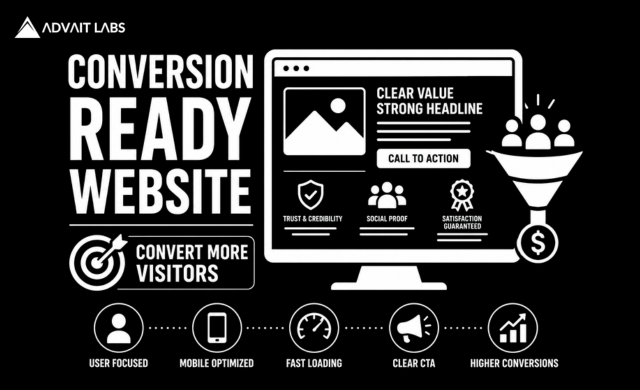
Conversion Ready Website is more than a modern-looking website—it’s a website designed to turn visitors into leads, customers, or subscribers. In 2026, businesses can no longer rely on attractive visuals alone. Today’s users expect fast-loading pages, intuitive navigation, mobile-friendly experiences, and clear calls to action. At the same time, search engines and AI-powered platforms prioritize websites that deliver excellent user experiences and trustworthy information. At Advait Technology Labs, we design and develop conversion-ready websites that combine SEO, performance, and user-centric design to help businesses generate more leads and maximize their return on investment. This guide explains the essential features every conversion-ready website should have in 2026.
What Is a Conversion Ready Website?
A Conversion Ready Website is a website strategically designed to encourage visitors to complete a desired action, such as:
- Filling out a contact form
- Booking a consultation
- Requesting a quote
- Making a purchase
- Calling your business
- Subscribing to a newsletter
Every element—from the homepage to the checkout page—is optimized to reduce friction and improve conversions.
Why Conversion Readiness Matters
Driving traffic to your website is only half the challenge.
If visitors leave without taking action, your marketing investment delivers limited returns.
A conversion-ready website helps businesses:
- Generate more qualified leads
- Increase online sales
- Improve customer engagement
- Reduce bounce rates
- Maximize marketing ROI
- Build customer trust
Better conversions mean you get more value from your existing website traffic.
1. Fast Loading Speed
Website speed remains one of the strongest conversion factors.
Users expect pages to load in just a few seconds.
Slow websites often experience:
- Higher bounce rates
- Lower engagement
- Reduced conversions
Improve speed by:
- Compressing images
- Using browser caching
- Optimizing code
- Choosing reliable hosting
- Minimizing unnecessary scripts
Fast websites create better first impressions and support SEO.
2. Mobile-First Design
Most visitors now browse websites using smartphones.
Your website should provide a seamless experience across:
- Mobile phones
- Tablets
- Laptops
- Desktop computers
Responsive design ensures users can easily navigate, read content, and complete actions regardless of device.
3. Clear Calls to Action (CTAs)
Visitors should immediately understand what to do next.
Effective CTAs include:
- Get a Free Quote
- Schedule a Consultation
- Contact Our Team
- Book a Demo
- Start Your Project
Place CTAs strategically throughout the website rather than only at the bottom of pages.
4. Simple Navigation
Confusing menus create frustration.
A conversion-ready website uses:
- Clear navigation labels
- Logical page hierarchy
- Visible contact information
- Easy-to-find service pages
- Simple user journeys
Visitors should reach important information within just a few clicks.
5. Trust Signals
People buy from businesses they trust.
Include credibility-building elements such as:
- Customer testimonials
- Client logos
- Case studies
- Industry certifications
- Awards
- Security badges
- Google reviews
Trust signals reduce hesitation during the buying process.
6. SEO-Friendly Website Structure
A website that cannot be found won’t generate conversions.
Strong SEO foundations include:
- Clean URLs
- Optimized headings
- Internal linking
- Fast page speed
- Structured data
- Mobile optimization
SEO and conversions work together to generate sustainable growth.
7. High-Quality Content
Every page should answer visitor questions clearly.
Focus on:
- Benefits instead of features
- Customer pain points
- Frequently asked questions
- Clear service explanations
- Helpful resources
Valuable content builds confidence before users contact your business.
8. Conversion-Optimized Forms
Long forms discourage users.
Best practices include:
- Request only essential information
- Use clear field labels
- Minimize required fields
- Provide confirmation messages
- Optimize forms for mobile users
Simplifying forms often improves lead generation.
9. Strong Visual Hierarchy
Good design guides attention naturally.
Use:
- Clear headings
- White space
- Readable typography
- Consistent branding
- High-quality images
Visual hierarchy helps users focus on the most important information.
10. Analytics and Conversion Tracking
You can’t improve what you don’t measure.
Monitor metrics such as:
- Conversion rate
- Bounce rate
- Time on page
- Form submissions
- Phone calls
- Click-through rates
Data helps identify opportunities for ongoing optimization.
Final Thoughts
A Conversion Ready Website is one of the most valuable investments a business can make in 2026. By combining fast performance, mobile-first design, intuitive navigation, compelling content, trust signals, and strategic calls to action, businesses can significantly improve lead generation and customer acquisition.
Rather than focusing only on appearance, a conversion-ready website is built to achieve measurable business outcomes. It supports SEO, enhances user experience, and prepares your business for the future of AI-powered search.
If you’re looking to build or redesign a website that not only looks professional but also converts visitors into customers, Advait Technology Labs can help you create a high-performing, conversion-ready website tailored to your business goals.
Visit Advait Technology Labs Today!
Frequently Asked Questions
What is a Conversion Ready Website?
A Conversion Ready Website is designed to encourage visitors to take specific actions, such as contacting your business, requesting a quote, booking a consultation, or making a purchase.
Why is a Conversion Ready Website important?
It improves lead generation, increases sales, enhances user experience, and helps businesses achieve a higher return on their marketing investment.
What features should a Conversion Ready Website have?
It should include fast loading speeds, responsive design, clear calls to action, intuitive navigation, SEO optimization, trust signals, quality content, and conversion tracking.
Does website design affect conversion rates?
Yes. A well-designed website with a strong user experience and optimized layout makes it easier for visitors to trust your business and complete desired actions.
