

Negative Keywords: The Most Underused Way to Cut Wasted Google Ads Spend
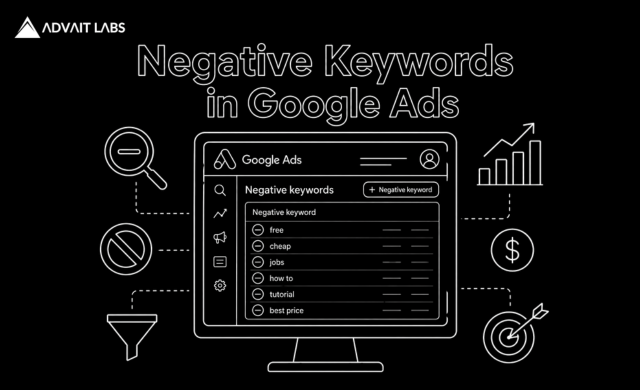
Negative keywords are one of the most powerful yet underused features in Google Ads. While many businesses spend time researching high-performing keywords to attract customers, they often overlook the importance of excluding search terms that don’t align with their products or services. This oversight can lead to irrelevant clicks, higher advertising costs, and lower conversion rates.
Every click on a Google Ads campaign costs money, and not every visitor is a potential customer. If your ads appear for searches unrelated to your business, you’re paying for traffic that is unlikely to generate leads or sales. By implementing the right negative keywords, businesses can prevent their ads from appearing in irrelevant searches, improve targeting, and make better use of their advertising budget.
At Advait Technology Labs, we help businesses create data-driven Google Ads campaigns that maximize qualified leads while minimizing wasted ad spend. In this guide, you’ll learn what negative keywords are, why they matter, how to build an effective negative keyword list, and how they can significantly improve your campaign performance.
What Are Negative Keywords?
Negative keywords are words or phrases that tell Google Ads not to show your ads when users include those terms in their search queries.
Instead of deciding when your ads should appear, they help determine when your ads should not appear.
For example, if your company sells premium ERP software, you may add negative keywords like:
- Free
- Jobs
- Careers
- Internship
- Tutorial
- Download
This ensures your ads don’t appear for users who are unlikely to become paying customers.
Why Are Negative Keywords Important?
Many advertisers focus solely on adding new keywords while forgetting that eliminating irrelevant traffic is equally important.
Without negative keywords, Google Ads may display your ads for searches that have little or no commercial intent.
For example, a business selling CRM software might accidentally receive clicks from searches such as:
- Free CRM software
- CRM tutorial
- CRM interview questions
- CRM course
Although these searches contain your primary keyword, the users behind them are looking for something entirely different.
Filtering irrelevant searches allows your advertising budget to be spent on users who are actually interested in your products or services.
How Negative Keywords Reduce Wasted Ad Spend
Every unnecessary click increases your advertising costs without contributing to revenue.
Using negative keywords helps eliminate these wasted clicks before they happen.
Imagine you’re running ads for website design services.
Without negative keywords, your ads could appear for searches like:
- Free website templates
- Website design course
- Learn web design
- Website design jobs
These users aren’t looking to hire an agency.
By excluding terms such as free, course, jobs, and templates, you ensure your ads are shown to users searching for:
- Website design company
- Professional website design services
- Website design agency near me
This improves both lead quality and campaign efficiency.
Benefits of Using Negative Keywords
Better Click-Through Rate (CTR)
When your ads are shown only to relevant audiences, users are more likely to click because the ad matches their intent.
Higher relevance often results in improved click-through rates.
Higher Conversion Rates
Traffic quality matters more than traffic volume.
Negative keywords help filter out users who have no intention of buying, allowing your campaigns to attract more qualified prospects.
This often leads to stronger conversion rates.
Lower Cost Per Click (CPC)
Google rewards relevant campaigns.
As your campaign relevance improves, your Quality Score may increase, helping reduce your average cost per click over time.
Lower Cost Per Acquisition (CPA)
Removing irrelevant traffic means more of your advertising budget goes toward users who are likely to convert.
This can significantly reduce customer acquisition costs.
Better Return on Ad Spend (ROAS)
Every advertising campaign aims to generate measurable business results.
Negative keywords improve overall return on investment by helping businesses focus their spending on high-intent audiences.
Types of Negative Keywords
Google Ads supports three different match types for negative keywords.
Negative Broad Match
Your ad won’t appear if the user’s search contains all the negative keyword terms, regardless of order.
Example:
Negative keyword:
digital marketing
Blocked searches may include:
- Digital marketing agency
- Agency for digital marketing
Negative Phrase Match
Your ad won’t appear if the exact phrase appears in the search.
Example:
Negative phrase:
“free CRM”
Blocked search:
Best free CRM software
Negative Exact Match
Your ad is blocked only when the search exactly matches the specified keyword.
Example:
Negative exact keyword:
[CRM software]
Only that exact search will be excluded.
How to Find the Right Negative Keywords
Building an effective negative keyword list requires ongoing analysis rather than a one-time setup.
Review the Search Terms Report
Google Ads provides a Search Terms Report showing the actual searches that triggered your ads.
Review this report regularly to identify irrelevant searches that should be excluded.
Understand Customer Intent
Think about what your ideal customer is actually searching for.
Someone searching for “website design pricing” is much closer to making a purchase than someone searching for “website design tutorial.”
Understanding search intent helps identify valuable negative keywords.
Analyze Customer Feedback
Sales teams often know which inquiries never convert.
Their insights can reveal search terms that consistently attract unqualified leads.
Study Competitor Campaigns
Competitor research can help identify keywords that generate traffic but don’t match your business goals.
Why Negative Keywords Matter More with AI-Powered Google Ads
Google Ads increasingly relies on artificial intelligence to automate bidding, audience targeting, and keyword matching.
While automation improves campaign efficiency, it can also broaden keyword matching.
That’s why negative keywords remain essential.
They help Google’s AI understand which searches are irrelevant, improving campaign precision and reducing wasted spend.
Even with Smart Bidding and AI-powered campaigns, negative keywords continue to play a critical role in maintaining high-quality traffic.
How Advait Technology Labs Optimizes Google Ads Campaigns
Running successful Google Ads campaigns requires more than selecting the right keywords.
At Advait Technology Labs, we develop PPC strategies that combine keyword research, audience targeting, landing page optimization, and continuous campaign refinement.
Our Google Ads services include:
- Keyword research
- Negative keyword optimization
- Campaign setup and management
- Conversion tracking
- Landing page optimization
- Performance monitoring
- AI-driven campaign optimization
- ROI reporting
By continuously analyzing search behavior and refining campaigns, we help businesses reduce wasted ad spend while increasing qualified leads and conversions.
Final Thoughts
Negative keywords are one of the simplest yet most effective ways to improve Google Ads performance. By preventing your ads from appearing for irrelevant searches, you can reduce wasted spend, improve click quality, increase conversions, and achieve a stronger return on investment.
Instead of focusing only on the keywords you want to target, take time to identify the searches you want to avoid. A well-maintained negative keyword strategy can significantly improve campaign performance without increasing your advertising budget.
If you’re looking to optimize your PPC campaigns and maximize your advertising ROI, Advait Technology Labs can help you build data-driven Google Ads strategies that deliver measurable business growth.
Frequently Asked Questions
What are negative keywords?
Negative keywords are words or phrases that prevent your Google Ads from appearing for irrelevant searches, helping improve campaign targeting and reduce wasted advertising spend.
Why are negative keywords important in Google Ads?
They help eliminate irrelevant clicks, improve click-through rates, reduce costs, and attract users who are more likely to convert into customers.
How often should I update my negative keyword list?
It’s recommended to review your Search Terms Report at least once a month, or more frequently for active campaigns, to identify new irrelevant search queries.
Can negative keywords improve Google Ads ROI?
Yes. By filtering out unqualified traffic, negative keywords help businesses spend their advertising budget more efficiently, leading to better conversion rates and improved return on ad spend.
How can Advait Technology Labs help with Google Ads optimization?
Advait Technology Labs provides Google Ads strategy, keyword research, negative keyword optimization, campaign management, conversion tracking, and performance analysis to help businesses generate high-quality leads while reducing wasted advertising costs.
