

What Is Generative Engine Optimization (GEO) and Why It Matters for Your Business
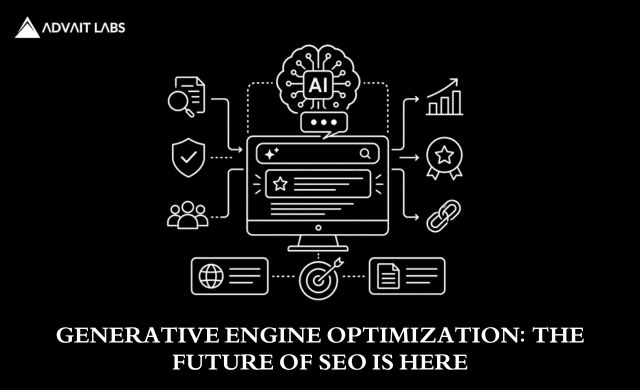
Generative engine optimization is rapidly becoming one of the most important digital marketing strategies for businesses that want to remain visible in the age of AI-powered search. As platforms like ChatGPT, Google AI Overviews, Microsoft Copilot, Perplexity, and Anthropic Claude change how people discover information online, businesses must rethink traditional SEO strategies.
For years, SEO focused on helping websites rank higher on search engine results pages. Today, users are increasingly receiving direct answers from AI systems instead of clicking through multiple websites. This shift has created a new optimization discipline known as Generative Engine Optimization, or GEO.
Businesses that adapt early can improve their visibility within AI-generated answers, while those that ignore GEO risk losing traffic, brand awareness, and potential customers.
Call 081792 08586 | Contact Advait technology Labs.
What Is Generative Engine Optimization?
Generative engine optimization (GEO) is the process of optimizing content so AI-powered search engines and generative search platforms can discover, understand, trust, and reference your content when generating answers for users.
Unlike traditional SEO, which focuses on ranking web pages, GEO focuses on increasing the likelihood that AI systems will cite, reference, summarize, or recommend your content.
How Generative Search Differs From Traditional Search
Traditional search engines display a list of links and allow users to choose which website to visit.
Generative search works differently.
Instead of presenting only links, AI systems generate complete answers by analyzing information from multiple sources.
Examples include:
- Google AI Overviews
- ChatGPT Search
- Microsoft Copilot
- Perplexity AI
- Claude
- Gemini
Users often receive answers directly without needing to visit multiple websites.
This is changing how businesses earn visibility online.
Why Generative Engine Optimization Matters
1. Search Behavior Is Changing
People increasingly use conversational queries.
Instead of searching:
“SEO services Hyderabad”
Users now ask:
“Which SEO agency is best for a healthcare business in Hyderabad?”
AI systems generate detailed responses rather than simply showing a list of websites.
Businesses that optimize for generative engine optimization are more likely to appear within these responses.
2. AI Search Can Influence Buying Decisions
Many users trust AI-generated recommendations because they receive summarized information quickly.
When AI systems reference your content, your business gains:
- More visibility
- More credibility
- More brand awareness
- More opportunities to attract customers
In many cases, being cited by an AI engine may become just as valuable as ranking on the first page of search results.
3. GEO Supports Long-Term Search Visibility
Search is evolving rapidly.
Businesses that rely solely on traditional SEO may find it harder to maintain visibility as AI-generated answers become more common.
Generative engine optimization helps businesses remain discoverable across both traditional search engines and AI-powered search platforms.
How Generative Engine Optimization Works
AI systems tend to favor content that is:
- Well-structured
- Factually accurate
- Comprehensive
- Easy to understand
- Authoritative
- Relevant to user intent
When AI engines evaluate content, they look for signals that indicate expertise and trustworthiness.
The stronger these signals are, the more likely your content is to be referenced.
Key Elements of Generative Engine Optimization
Create Comprehensive Content
AI systems often prefer content that covers a topic thoroughly.
Instead of publishing shallow articles, businesses should create detailed resources that answer multiple related questions.
Comprehensive content increases the chances of being referenced by AI-generated answers.
Use Clear Question-and-Answer Formats
Generative search platforms frequently extract information from pages that answer questions directly.
Examples include:
What is Generative Engine Optimization?
Why is GEO important?
How does GEO differ from SEO?
Direct answers make content easier for AI systems to understand and summarize.
Build Topical Authority
AI engines often trust websites that consistently publish content around a specific subject.
Businesses should create topic clusters and supporting content that demonstrate expertise within their industry.
Strong topical authority improves both SEO and generative engine optimization performance.
Strengthen E-E-A-T Signals
Google and AI systems increasingly evaluate:
- Experience
- Expertise
- Authoritativeness
- Trustworthiness
Businesses should strengthen:
- Case studies
- Reviews
- Industry expertise
- Author biographies
- Trust signals
Authority helps AI systems determine whether content is reliable.
Optimize for Search Intent
AI systems prioritize content that satisfies user intent.
Every page should answer real user questions and provide useful information rather than focusing solely on keywords.
Understanding search intent is becoming critical for successful generative engine optimization.
GEO vs SEO: What’s the Difference?
| SEO | GEO |
| Focuses on rankings | Focuses on AI visibility |
| Optimizes for search engines | Optimizes for AI-generated answers |
| Targets clicks | Targets citations and recommendations |
| Relies on SERPs | Relies on AI responses |
| Measures rankings and traffic | Measures mentions and AI visibility |
The two strategies are not competitors.
Instead, GEO and SEO should work together.
Businesses that invest in both are more likely to succeed as search evolves.
How Advait Technology Labs Helps Businesses Improve GEO and SEO
At Advait Technology Labs, we help businesses prepare for the future of search through integrated SEO, GEO, content strategy, AI search optimization, and digital marketing solutions.
Our approach focuses on:
- Traditional SEO performance
- AI search visibility
- Content authority
- Search intent optimization
- Technical SEO
- Topical authority development
By combining SEO and generative engine optimization strategies, we help businesses improve visibility across both search engines and AI-powered discovery platforms.
Final Thoughts
Generative engine optimization is quickly becoming an essential component of modern digital marketing. As AI-powered search engines transform how people discover information, businesses must adapt their content strategies to remain visible and competitive.
While traditional SEO remains important, GEO helps businesses position themselves for the next generation of search experiences. Companies that focus on authority, trust, content quality, and user intent will be better equipped to earn visibility within AI-generated answers and maintain long-term digital growth.
The future of search is no longer just about rankings. It’s about becoming the source that AI systems trust enough to recommend.
FAQs
What is generative engine optimization?
Generative engine optimization is the process of optimizing content so AI-powered search engines can discover, understand, and reference it when generating answers for users.
How is GEO different from SEO?
SEO focuses on improving search rankings, while GEO focuses on increasing visibility within AI-generated responses and recommendations.
Why is generative engine optimization important?
As AI search platforms become more popular, businesses need GEO to maintain visibility, attract customers, and remain competitive online.
Does GEO replace SEO?
No. GEO complements SEO. Businesses should optimize for both traditional search engines and AI-powered search experiences.
Which platforms use generative search?
Examples include Google AI Overviews, ChatGPT Search, Gemini, Microsoft Copilot, Perplexity AI, and Claude.
