

How AI Is Changing User Behavior in Search Engines
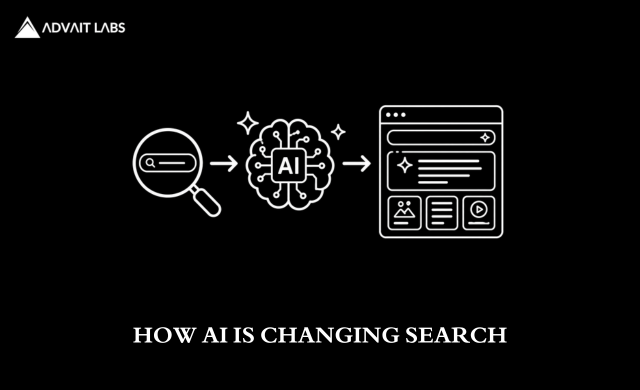
AI search behavior is transforming the way people interact with search engines faster than ever before. Traditional search patterns based on short keywords and simple queries are rapidly evolving into conversational, intent-driven, and AI-assisted search experiences. As AI-powered search engines become more advanced, users now expect faster answers, personalized responses, and more accurate search experiences.
At Advait Technology Labs, we closely track how AI-driven search is reshaping SEO, content marketing, and digital visibility so businesses can adapt to changing user behavior and maintain long-term organic growth in 2026 and beyond.
The Evolution of Search Behavior
Search engines have changed dramatically over the past decade.
Earlier, users typically searched using:
- short keyword phrases,
- fragmented searches,
- and basic informational queries.
Today, AI-powered search engines are encouraging users to search more naturally using:
- conversational language,
- detailed questions,
- and context-based queries.
Search is becoming more human-like. This shift is fundamentally changing:
- SEO strategies,
- content optimization,
- and user engagement patterns.
Why AI Is Changing Search Behavior
AI-powered search systems are designed to:
- understand context,
- interpret intent,
- and generate more relevant answers.
Instead of relying only on keywords, modern search engines now analyze:
- meaning,
- relationships between topics,
- search history,
- and user behavior patterns.
As a result, users are adapting their search habits because AI systems now understand:
- conversational phrasing,
- follow-up questions,
- and complex intent.
This creates a more interactive search experience.
1. Users Are Searching More Conversationally
One of the biggest shifts in AI search behavior is the rise of conversational search.
Instead of typing:
- “SEO company Hyderabad”
users now search:
- “Which SEO company is best for lead generation in Hyderabad?”
This happens because AI-powered search engines better understand natural language.
Users are becoming more comfortable asking:
- detailed questions,
- multi-step queries,
- and intent-rich searches.
This trend is strongly influencing:
- content creation,
- keyword strategy,
- and semantic SEO.
2. Users Expect Instant Answers
AI-generated search summaries are changing user expectations.
People increasingly expect:
- direct answers,
- summarized information,
- and faster results.
Features like:
- AI Overviews,
- featured snippets,
- and conversational search interfaces
reduce the need for users to visit multiple websites.
This creates major changes in:
- click-through rates,
- search engagement,
- and organic traffic patterns.
Businesses must now compete not only for rankings but also for visibility within AI-generated responses.
3. Search Queries Are Becoming Longer
AI-powered search is encouraging users to search with more detailed intent.
Instead of short-tail keywords, users now search with:
- longer phrases,
- context-heavy questions,
- and problem-solving queries.
Longer search queries help AI systems provide:
- more accurate answers,
- contextual understanding,
- and personalized results.
This is increasing the importance of:
- long-tail SEO,
- semantic relevance,
- and search intent optimization.
4. Users Trust AI-Powered Recommendations More
Search engines are increasingly presenting:
- AI-generated summaries,
- recommended actions,
- and predictive suggestions.
As AI systems become more advanced, users are beginning to trust:
- summarized responses,
- AI recommendations,
- and contextual search guidance.
This affects:
- purchasing decisions,
- brand discovery,
- and content visibility.
Businesses must now focus on building:
- authority,
- trust,
- and semantic relevance
to remain visible in AI-assisted search environments.
5. Search Is Becoming More Personalized
AI-powered search engines increasingly personalize results based on:
- user behavior,
- location,
- interests,
- and search history.
Two users searching the same query may receive different results depending on:
- intent,
- browsing patterns,
- and contextual relevance.
This means businesses must optimize for:
- audience relevance,
- user experience,
- and personalized content journeys.
Generic SEO strategies are becoming less effective.
6. Voice Search and AI Assistants Are Influencing Search Behavior
The rise of:
- voice assistants,
- smart devices,
- and AI chat interfaces
is changing how users search online.
Voice searches are usually:
- longer,
- conversational,
- and intent-focused.
Examples:
- “What’s the best SEO strategy for local businesses in 2026?”
- “How can I improve my Google rankings quickly?”
This is accelerating the shift toward:
- conversational SEO,
- natural language optimization,
- and semantic search strategies.
How AI Search Behavior Is Changing SEO
The evolution of AI search behavior is forcing businesses to rethink SEO strategies completely.
1. Keyword Stuffing Is Becoming Obsolete
Modern AI search engines understand:
- context,
- semantics,
- and user intent.
This reduces the effectiveness of:
- repetitive keywords,
- low-quality optimization,
- and outdated SEO tactics.
Businesses must focus more on:
- helpful content,
- semantic SEO,
- and topical authority.
2. Search Intent Matters More Than Ever
AI-powered search systems prioritize content that best satisfies user intent.
Businesses must understand:
- why users search,
- what information they expect,
- and how they make decisions.
Search intent optimization is becoming essential for:
- rankings,
- engagement,
- and conversions.
3. Content Depth Is More Important
AI systems favor content that provides:
- comprehensive answers,
- topical depth,
- and meaningful value.
Thin content and shallow AI-generated pages are becoming less effective.
Businesses should focus on:
- expert insights,
- educational resources,
- and detailed content experiences.
4. Semantic SEO Is Becoming Critical
AI-powered search engines rely heavily on:
- semantic understanding,
- contextual relationships,
- and entity recognition.
This means SEO now depends more on:
- topic relevance,
- content structure,
- and semantic keyword variations.
Semantic SEO is becoming central to modern search visibility.
5. User Experience Influences Search Performance
AI search systems increasingly evaluate:
- engagement signals,
- readability,
- usability,
- and content satisfaction.
Businesses should improve:
- page speed,
- mobile optimization,
- navigation,
- and content clarity.
User experience now directly impacts SEO success.
How Businesses Should Adapt to AI Search Behavior
To succeed in AI-driven search environments, businesses must modernize their SEO and content strategies.
1. Create Conversational Content
Content should sound natural and answer real user questions clearly.
Businesses should include question-based headings,conversational phrasing,and semantic variations.
2. Focus on Topical Authority
AI systems increasingly favor websites demonstrating expertise,depth,and authority.
Businesses should build topic clusters,pillar content,and interconnected educational resources.
3. Optimize for Search Intent
Every page should align with a specific user goal,search purpose,and decision stage.
Intent-focused content performs better in AI-powered search.
4. Improve Content Structure
AI systems prefer organized content,logical hierarchy,concise explanations, and readable formatting.
Businesses should structure content clearly using headings,FAQs,bullet points,and semantic organization.
5. Build Trust and Credibility
AI-powered search increasingly values E-E-A-T signals,real expertise,and trustworthy information.
Businesses should strengthen:author credibility,reviews,case studies,and expert-driven content.
The Future of AI Search Behavior
Search behavior will continue evolving as AI systems become more advanced.
Future search experiences may become:
- more conversational,
- predictive,
- personalized,
- and interactive.
Users will increasingly expect instant answers,contextual recommendations,and AI-assisted decision-making.
This means businesses must prioritize relevance,user-focused experiences,and authority-driven content strategies.
The future of SEO belongs to businesses that understand both technology,and human behavior.
Final Thoughts
AI search behavior is reshaping the future of search engines, SEO, and digital marketing.
As AI-powered search systems evolve, users are changing:
- how they search,
- what they expect,
- and how they interact with online content.
Businesses that continue relying on outdated SEO tactics may struggle to maintain visibility.
Success in modern search increasingly depends on understanding user intent,building topical authority, improving user experience,and creating genuinely helpful content.
As AI continues transforming search behavior, businesses that adapt early will gain a significant long-term advantage in organic visibility and digital growth.
FAQs
1. What is AI search behavior?
AI search behavior refers to the way users interact with modern AI-powered search engines using conversational, intent-focused, and context-driven search queries instead of short keyword-based searches.
2. How is AI changing the way people search online?
AI is making search more conversational and personalized. Users now expect faster answers, AI-generated summaries, predictive suggestions, and more accurate search experiences from search engines.
3. Why are conversational searches becoming more common?
Conversational searches are increasing because AI-powered search engines can better understand natural language, detailed questions, and user intent. This allows users to search more naturally instead of typing fragmented keywords.
4. How does AI search behavior impact SEO?
AI search behavior is changing SEO by increasing the importance of semantic SEO, search intent optimization, topical authority, content quality, and user experience instead of traditional keyword-focused optimization.
5. How can businesses adapt to AI-powered search engines?
Businesses can adapt by creating conversational content, improving semantic relevance, building topical authority, optimizing for search intent, and providing high-quality user-focused content experiences.
