

Search Intent Optimization: The Key to Better SEO Rankings
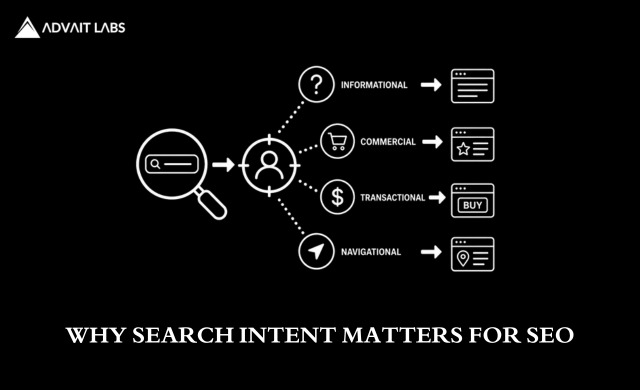
Search intent optimization is becoming one of the most important SEO strategies in modern search. Google no longer ranks pages based only on keywords or backlinks — it increasingly prioritizes content that accurately matches user intent and solves real search queries effectively. Businesses that ignore search intent often struggle with low rankings, poor engagement, and weak conversions even when they target high-volume keywords.
At Advait Technology Labs, we help businesses build SEO strategies focused on search intent optimization, semantic relevance, and user-focused content that improves both rankings and conversion performance in today’s AI-driven search environment.
What Is Search Intent Optimization?
Search intent optimization is the process of creating content that matches the reason behind a user’s search query.
Instead of focusing only on keywords, modern SEO focuses on:
- what users actually want,
- why they are searching,
- and what type of information they expect.
Google’s algorithms increasingly analyze:
- user behavior,
- contextual meaning,
- semantic relevance,
- and content usefulness.
This means websites that align closely with search intent are more likely to:
- rank higher,
- improve engagement,
- and generate conversions.
Why Search Intent Matters in SEO
Modern search engines are designed to prioritize user satisfaction.
Google wants to provide:
- the most relevant answers,
- the best user experience,
- and the most accurate content for every query.
This means ranking success now depends heavily on:
- understanding user behavior,
- matching search expectations,
- and delivering valuable content.
Even highly optimized pages may struggle if they fail to satisfy search intent.
The 4 Main Types of Search Intent
Understanding search intent is essential for effective SEO.
1. Informational Intent
Users searching with informational intent want:
- answers,
- explanations,
- guides,
- or educational content.
Examples:
- What is semantic SEO?
- How does Google ranking work?
- What is topical authority?
Informational content works best when it is:
- detailed,
- easy to understand,
- and highly educational.
2. Navigational Intent
Users with navigational intent want to reach a specific website or brand.
Examples:
- Google Search Console
- YouTube Studio
- Advait Technology Labs
These searches are brand-focused and usually involve high familiarity.
3. Commercial Intent
Commercial intent users are researching before making a decision.
Examples:
- best SEO agency in Hyderabad
- top CRM software
- Google Ads services comparison
This type of content should:
- build trust,
- compare options,
- and guide decision-making.
Commercial intent keywords often generate strong lead opportunities.
4. Transactional Intent
Transactional intent users are ready to take action.
Examples:
- hire SEO company
- buy CRM software
- digital marketing services Hyderabad
These users are closest to conversion.
Landing pages optimized for transactional intent should focus on:
- clarity,
- trust,
- strong CTAs,
- and conversion optimization.
Why Most Businesses Fail at Search Intent Optimization
Many businesses still create content using outdated SEO strategies focused only on keywords.
This often leads to:
- mismatched content,
- poor engagement,
- and weak rankings.
Common mistakes include:
- targeting high-volume keywords without understanding intent,
- creating generic content,
- ignoring user expectations,
- and optimizing for search engines instead of users.
Search intent optimization requires understanding both:
- the keyword,
- and the motivation behind the search.
How Google Understands Search Intent
Google now uses advanced AI and semantic search systems to interpret:
- meaning,
- context,
- relationships between topics,
- and user behavior patterns.
Modern search algorithms analyze:
- click behavior,
- engagement signals,
- content structure,
- and semantic relevance.
This is why search intent optimization has become essential for SEO success.
Google increasingly rewards pages that:
- satisfy users quickly,
- answer questions clearly,
- and provide useful experiences.
Search Intent Optimization and Semantic SEO
Search intent optimization works closely with semantic SEO.
Instead of relying only on exact-match keywords, semantic SEO focuses on:
- topic relationships,
- contextual understanding,
- and conversational relevance.
This helps Google understand:
- what content means,
- who it helps,
- and how it relates to broader topics.
Businesses combining:
- semantic SEO,
- topical authority,
- and search intent optimization
often achieve stronger long-term rankings.
How Search Intent Optimization Improves SEO Performance
1. Higher Rankings
Content that satisfies search intent aligns better with Google’s ranking systems.
This increases the likelihood of:
- stronger rankings,
- broader keyword visibility,
- and long-term organic growth.
2. Better User Engagement
When users find exactly what they need, they:
- stay longer,
- engage more,
- and explore additional pages.
This improves:
- session duration,
- bounce rate,
- and user satisfaction.
3. Increased Conversions
Search intent optimization improves conversion potential because content aligns with user expectations.
For example:
- educational blogs attract awareness traffic,
- while transactional landing pages attract buyers.
Matching content to intent improves lead quality.
4. Improved AI Search Visibility
AI-powered search systems increasingly prioritize:
- contextual understanding,
- semantic relevance,
- and user-focused content.
Search intent optimization helps websites adapt to:
- AI Overviews,
- conversational search,
- and semantic search evolution.
How to Optimize Content for Search Intent
1. Analyze Search Results
Search results reveal what Google believes users want.
Businesses should study:
- ranking content,
- SERP structure,
- featured snippets,
- and search patterns.
This helps identify the dominant search intent.
2. Match Content Format to Intent
Different search intents require different content formats.
Examples:
- informational intent → guides and blogs
- commercial intent → comparisons and reviews
- transactional intent → service pages and landing pages
Content structure should align with user expectations.
3. Use Semantic Keywords Naturally
Modern SEO does not require excessive keyword repetition.
Businesses should use:
- semantic variations,
- related phrases,
- and conversational language.
This improves:
- readability,
- topical relevance,
- and semantic understanding.
4. Focus on User Experience
Search intent optimization also depends on user experience.
Businesses should improve:
- readability,
- page speed,
- navigation,
- and mobile usability.
Good UX helps users complete their goals more efficiently.
5. Create Comprehensive Content
Thin content rarely satisfies search intent fully.
Businesses should provide:
- detailed explanations,
- practical insights,
- examples,
- and meaningful value.
Comprehensive content performs better in modern SEO.
Search Intent Optimization in the Age of AI Search
AI-powered search is making search intent even more important.
Google increasingly relies on:
- conversational AI,
- semantic understanding,
- and AI-generated search experiences.
This means businesses must optimize for:
- meaning,
- context,
- and user satisfaction
instead of focusing only on traditional keyword tactics.
The future of SEO belongs to businesses that understand:
- user behavior,
- search psychology,
- and semantic relevance.
The Future of SEO Is Intent-Driven
Modern SEO is evolving beyond:
- keyword stuffing,
- isolated rankings,
- and outdated optimization tactics.
Search engines increasingly prioritize:
- user satisfaction,
- semantic understanding,
- and intent matching.
Businesses that master search intent optimization will gain:
- stronger rankings,
- better engagement,
- and more sustainable organic growth.
Final Thoughts
Search intent optimization is no longer optional in modern SEO.
As Google continues evolving toward:
- AI-powered search,
- semantic relevance,
- and user-focused ranking systems,
businesses must create content that genuinely aligns with user needs and expectations.
Websites that focus on:
- helpful experiences,
- semantic SEO,
- topical authority,
- and search intent
will consistently outperform websites relying on outdated SEO tactics.
Understanding why users search is now just as important as understanding what they search for.
FAQs
1. What is search intent optimization?
Search intent optimization is the process of creating content that matches the purpose behind a user’s search query.
2. Why is search intent important for SEO?
Search intent helps Google determine whether content satisfies user needs, which directly affects rankings and engagement.
3. What are the main types of search intent?
The four main types are:
- informational,
- navigational,
- commercial,
- and transactional intent.
4. How does search intent optimization improve conversions?
It aligns content with user expectations, helping attract more relevant traffic and improving lead quality.
5. Does search intent matter in AI-powered search?
Yes. AI-powered search systems increasingly prioritize semantic relevance, contextual understanding, and user-focused content.
